
Ngaru Whenua: Diffracting Indigenous Practices, Quantum Theory, Electronic Art and the Anthropocene
The pages here constitute the digital artefact associated with the exegesis. These are :
Documentation of the Interconnecting:pasha@patea Aotea Untanganui Patea Museum exhibition.
Arawhata Āniwaniwa Rainbow Bridges
Documentation of the five year window installation at Govett-Brewster Art Gallery Len Lye Centre, other Rainbow Bridge works and a Black Hole.
Documentation of the etched kōhatu and jounrey to the sacred site of Taputapuātea, Ra’iātea
This digital archive is specific to the PhD.
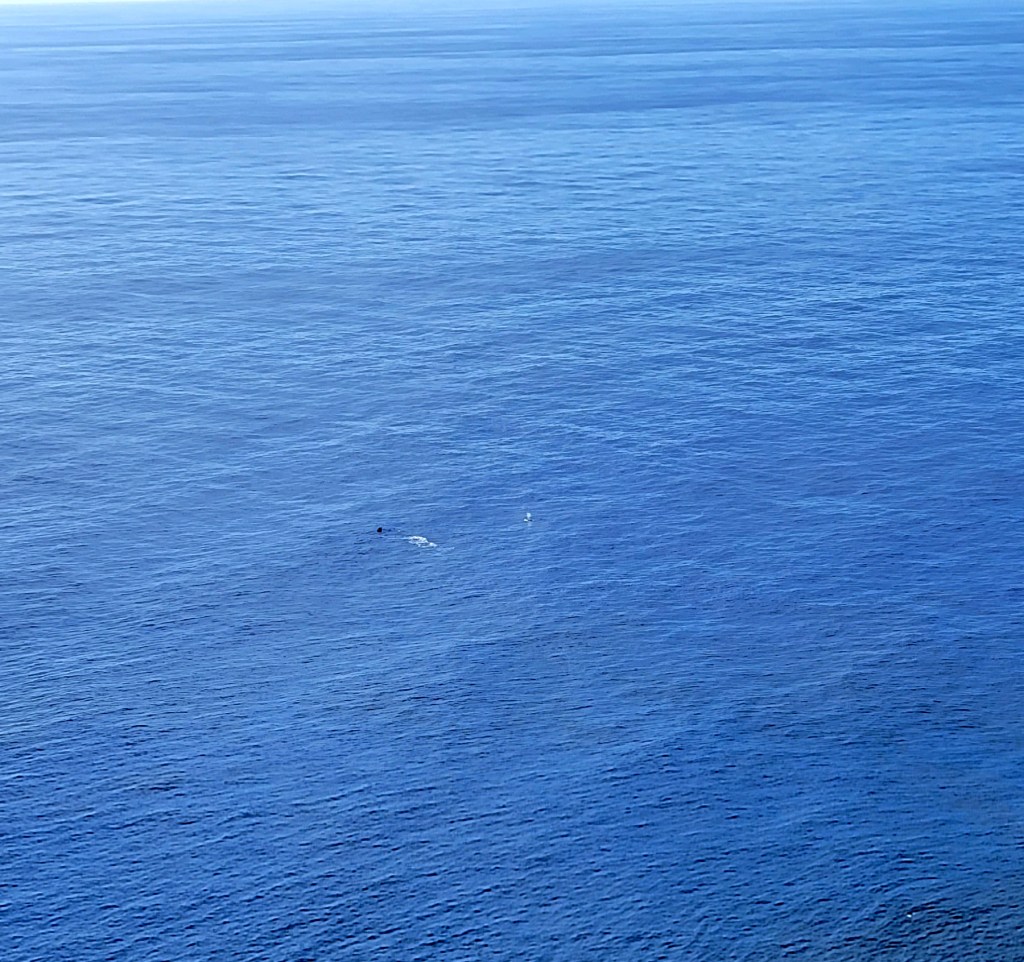
Ngaru Whenua wave forms off Hitiaurevareva Pitcairn. Note the way the wave forms stay distinct even when overlapping. The small white dots are a Humpack whale and calf.
Abstract
This practice-led PhD thesis presents the Ngaru Whenua Diffractive Method in an exploration of Indigenous Practices, Quantum Theory, Electronic Art and the Anthropocene. It proposes an evolution of diffractive method into multi-cultural discussion, after Donna Haraway (1997) and Karen Barad (2007). The approach is deeply rooted in Moana awareness of whakapapa (genealogy), creative wayfinding and a diffractive method that protects the mana and integrity of authors’ words on all sides of cultural debates.
Ngaru Whenua wave patterns are known by oceanic navigators. Called “diffractive” in the West, they apply to light, water and sound. Acknowledging precedence of diffraction in Indigenous awareness, this research explores Indigenous Practices founded in traditional Moana navigational practices (Kawaharada, 1992) and whakapapa. The diffractive wave patterning found in the wave-particle duality of light is a subject that vexed Quantum Theorists – as Barad (2007) writes. In diffracting Indigenous Practices and Quantum Theory, the writing of Samoan authors on the Vā, including Albert Wendt (1996), Albert Refiti (2014) and Lana Lopesi (2021) are put into exchange with the writing of Barad (2007) using direct quotations rather than paraphrasing. The contention is that this is necessary when engaging in multi-cultural, multi-disciplinary decolonised discourse, an essential core of Ngaru Whenua Diffractive Method.
Given the oceanic basis of the Ngaru Whenua discussion, the author’s oceanic whakapapa to Tahiti and Hitiaurevareva (Pitcairn Island) and the consequences for creative practice are outlined, introducing the key theme of wayfinding as creative practice. Resolving to a personal level, the issues of whakapapa and Moana diaspora provided important guides to a visual vocabulary that is then taken into diverse media and contexts. Consequences for creative practice are further reflected on in a diffraction of Electronic Art and the Anthropocene. Projects resulting from wayfinding include a curated one-person and extended family exhibition exploring the critical Moana notion of an interconnected universe, a five-year window commission for the Govett-Brewster Art Gallery, the creation of Arawhata Āniwaniwa Rainbow Bridges and Black Holes digital imagery, and Anthropocene explorations. The project’s epitome comes with the placement of a laser etched Kōhatu on the sacred navigator site of Taputapuātea Marae on Ra’iātea, and the return to Aotearoa with a Kōhatu, necessitating the acknowledgment of Tapu and Noa, Sacred and Mundane. Together the creative work practices Indigenous ecological connection as an essential and ecologising counter to the Anthropocene.
References
Barad, K M. (2007). Meeting the Universe Halfway: Quantum Physics and the Entanglement of Matter and Meaning. Duke University Press.
Haraway, D. (1997). Second millennium FemaleMan© meets OncoMouseTM: Feminism and technoscience. Routledge.
Lopesi, L. (2021). Moana cosmopolitan imaginaries: Toward an emerging theory of Moana art. [Doctoral thesis, Auckland University of Technology]. Tuwhera. https://openrepository.aut.ac.nz/items/c440f17a-cd06-4b1b-81ad-6d707be36280
Moore, J. W. (2017). The Capitalocene, Part I: On the nature and origins of our ecological crisis. Journal of Peasant Studies, 44(3), 594-630. https://doi.org/10.1080/03066150.2016.1235036
Refiti, A. (2014). Mavae and Tofiga: Spatial exposition of the Samoan cosmogony and architecture. [Doctoral thesis, Auckland University of Technology]. Tuwhera. https://openrepository.aut.ac.nz/items/16292b4a-0858-491e-9c7b-f26c06a15202
Wendt, A. (1996). Tatauing the post-colonial body. Span 42-43(April), 15-29.
 The website of Mahutoa 'Pasha' Clothier