
Kōhatu Ra’iātea
Ra’iātea is one of the three kōhatu destined for three Taputapuatea marae sites throughout Te Moana Nui a Kiwa Pacific Ocean
The Kōhatu works are a collaboration with Kim Kahu and Kaumatua (Elders) at each site. Where possible this includes Tohunga (Priests) and I am grateful to Tihoti of Taputapuātea Marae, Ra’iātea. The history of Polynesia after Colonisation is difficult, and only one Taputapuātea site maintains it’s mana or integrity today: the one on Ra’iātea. The Taputapuātea site in Aotearoa was bulldozed for housing, while on Hawai’i the location was turned into a dog walking park.
Kōhatu Ra’iātea in conjunction with local Tohunga (Priest) Tihoti, was placed on Taputapuātea Marae on October 5th, 2023 in the accompaniment of ten others. This page also gives an Anthropocene experiment, completed after the return from Ra’iātea and featuring the Otaha Frigate Bird, two of which swooped over after the ceremony.
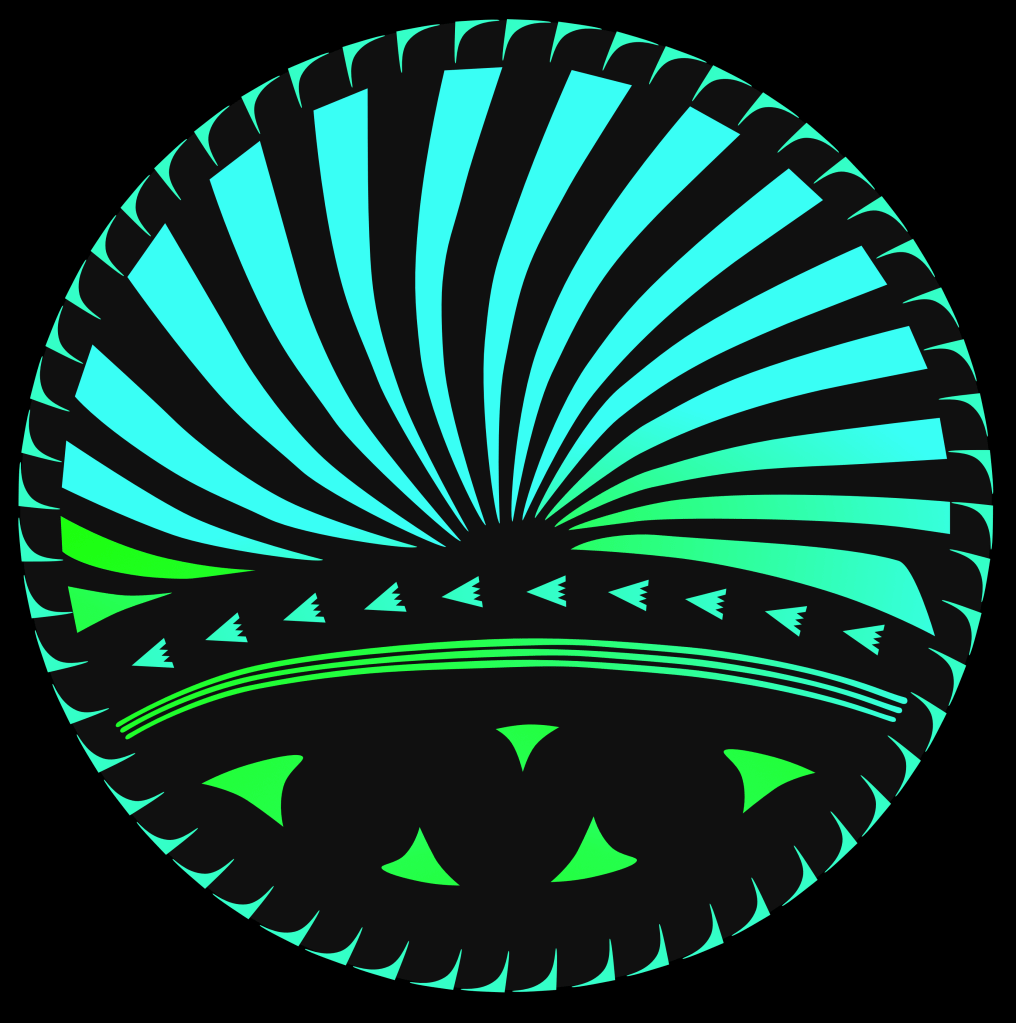
In the early Moana period there was a strong link between Hawai’i and Tahiti. The image above is derived from the ta moko tattau (tattoo) pattern called ‘Tahitian sunrise’ and was worn on the buttock. It is suggested a tupuna (ancestor) wore this ta moko, but it is difficult to verify. Certainly a buttock tattoo was worn by tupuna and certainly this was a pattern of the era. Ra’iatea is a short fortyfive minute flight from Tahiti.
Ra’iātea
Figure 134
Kava ceremony, LAKA Tāmaki Makaurau, Saturday 2nd September 2023

Note. Kava ceremony led by Grand Master Pakilau Manese Lau (centre left) and Therese Mangos (left). Given the full extent of the journey, the event organised by Susana Lei’ataua of LAKA was appropriate and an honour to receive.
Figure 135
View of marae at Marae Taputapuātea, Ra’iātea

Note. The main Marae Taputapuātea is at centre. Marae Haurivi is upper centre – this is the investiture marae for the Tamatoa lineage of paramount Ariki. The small marae on the beach front to the right of Haurivi is Ōpū-teina, the Kaiwhakatere navigator marae. To the right of Ōpū-teina across a small stream are several cops of trees: the furthest upper right cops of trees (not the single tree at the shoreline) is the site of the marae where the Ra’iātea Kōhatu was placed.
Figure 136
Marae Tau-‘aitū or Hititai
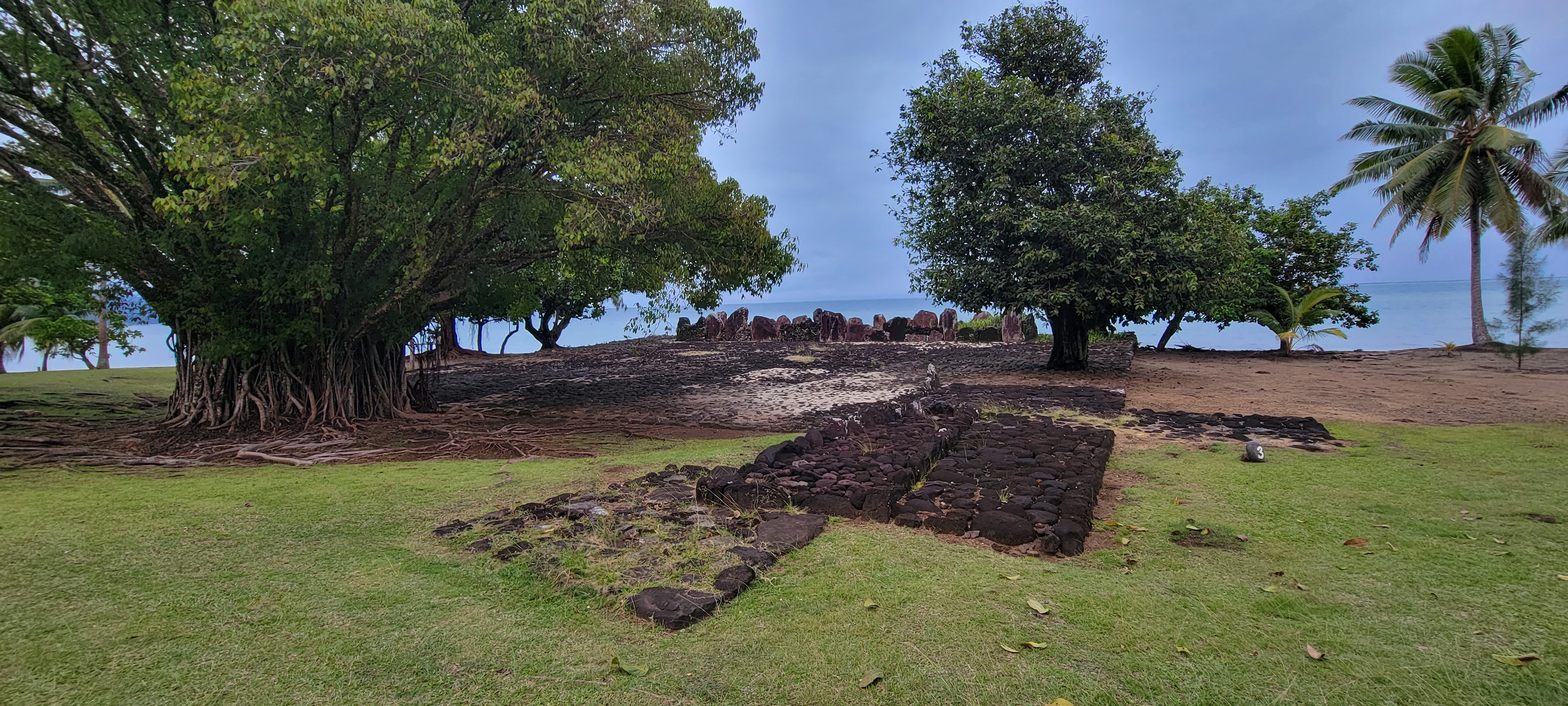
Note. This marae is the location where Rahui (prohibition of certain practices) are expressed.
Figure 137
Marae Ōpū-teina, Kaiwhakatere (navigator) marae

Note. Marae Ōpū-teina, located right on the shoreline is the marae from which navigators would depart. To the right of the palm tree is the place where waka (canoes) were brought up on shore for repairs and maintenance. Taputapuātea Marae on Ra’iātea, is regarded by some as the most sacred site in Te Moana Nui a Kiwa. It has maintained its mana or integrity to the current day.
Kōhatu Ra’iātea
Figure 138
Kōhatu Ra’iātea, 2022 – 2023
River stone, muka and laser etching
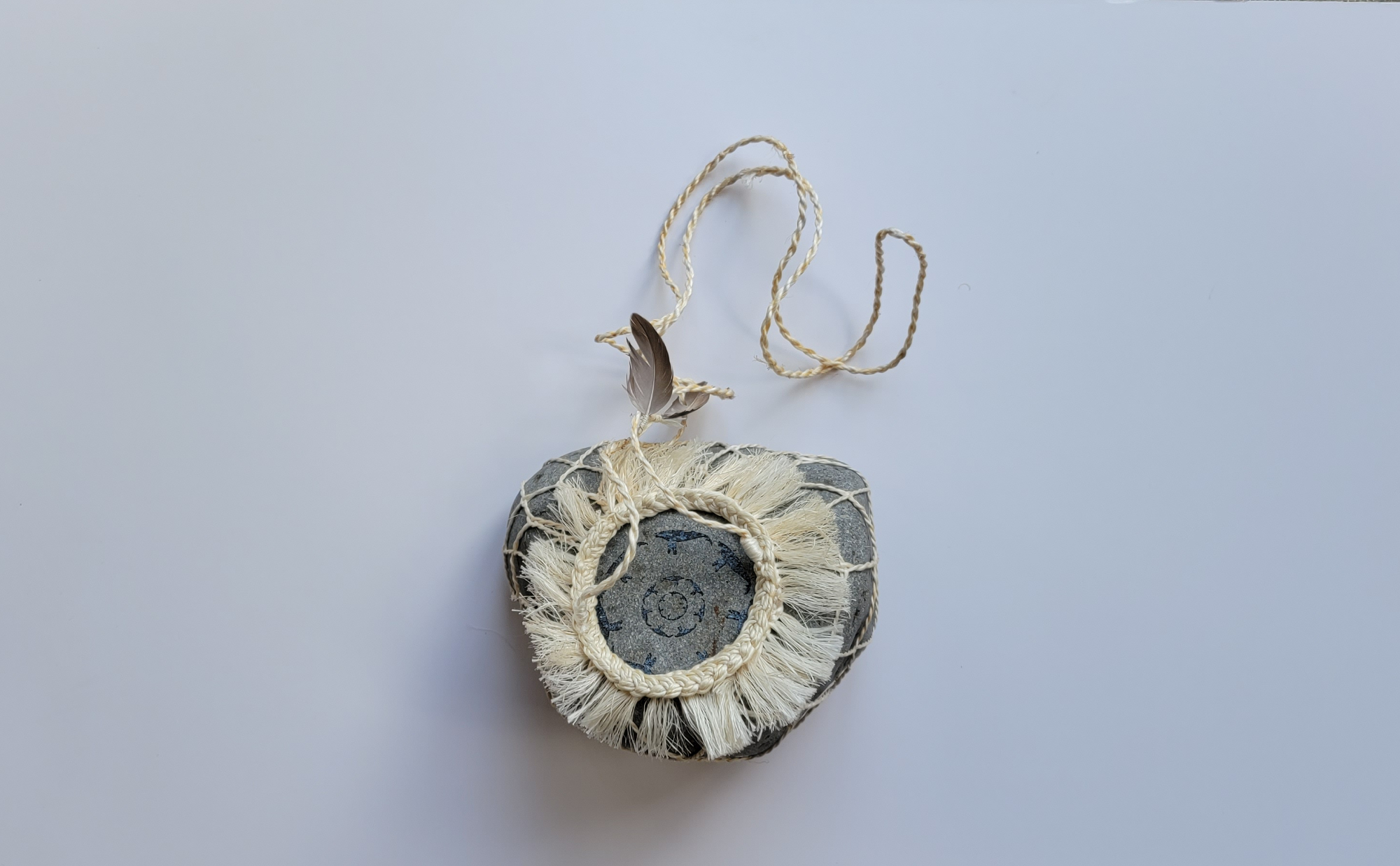
Note. This is the Rose of Whales pattern etched into Kōhatu and bound by Kim Kahu. The kōhatu were selected from the Waiwhakaiho Awa (River) with apropriate karakia (prayer, incantation, chant). All photographs by the artist-writer.
Figure 139
Kōhatu Ra’iātea Detail A, 2022 – 2023
River stone, muka and laser etching

Note. The Kōhatu is bound with muka that has whakapapa, as it is from harakeke (a type of flax) distributed by renowned weaver Diggeress Te Kanawa.
Figure 140
Kōhatu Ra’iātea Detail B, 2022 – 2023
River stone, muka and laser etching

Note. Laser light etched the Kōhatu, revealing the inner grain of the stone.
Figure 141
Kōhatu Ra’iātea Unbound, 2022 – 2023
River stone, muka and laser etching
Note. The Tohunga Tihoti stated that I should remove the binding as otherwise the Kōhatu would be taken. After reflection I realised that the binding loose from the stone was the ewe or placenta.
Figure 142
Kōhatu Ra’iātea Detail C, 2022 – 2023
River stone, muka and laser etching
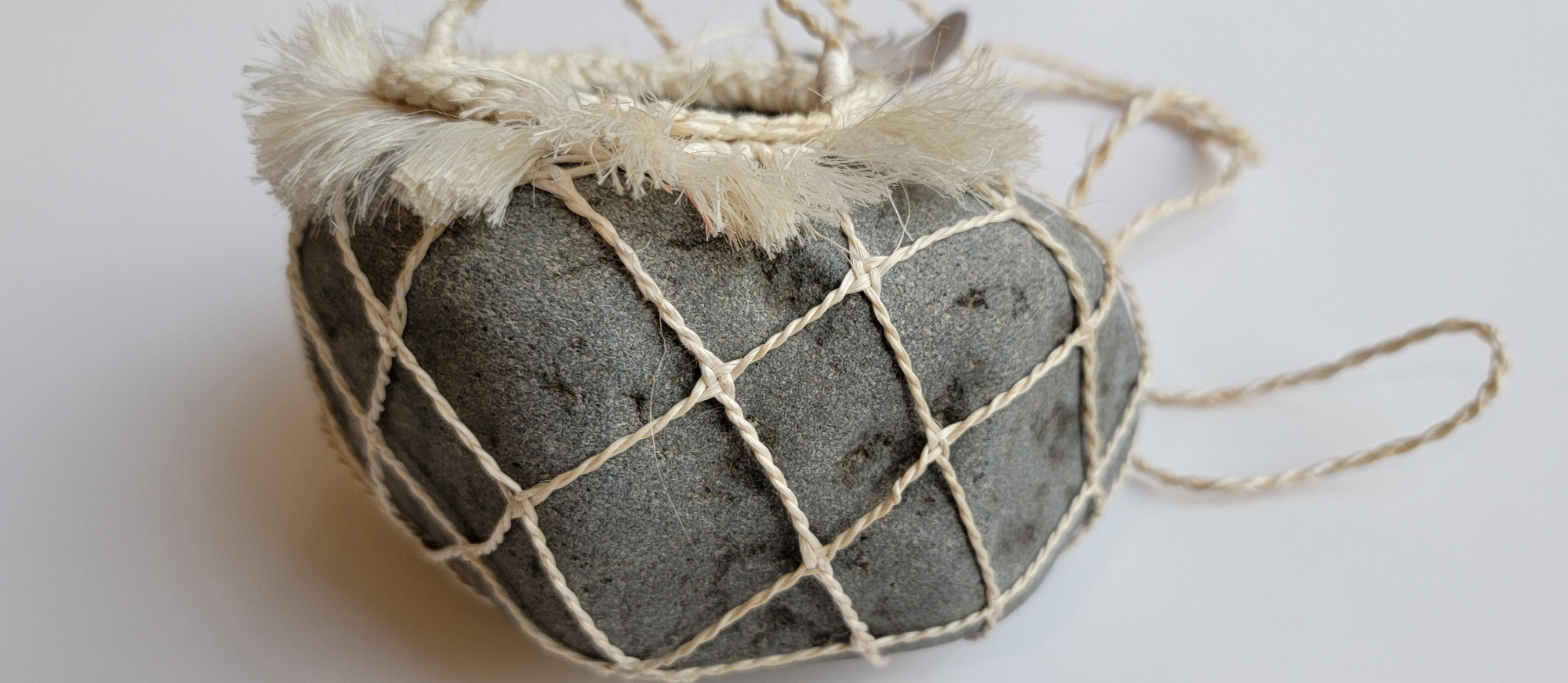
Note. The exegesis refers to knowledge as dimensional which in simple terms means looking from multiple angles, above and below. This type of scrutiny is well rewarded in the Kōhatu works.
Figure 143
Kōhatu Ra’iātea Detail D, 2022 – 2023
River stone, muka and laser etching
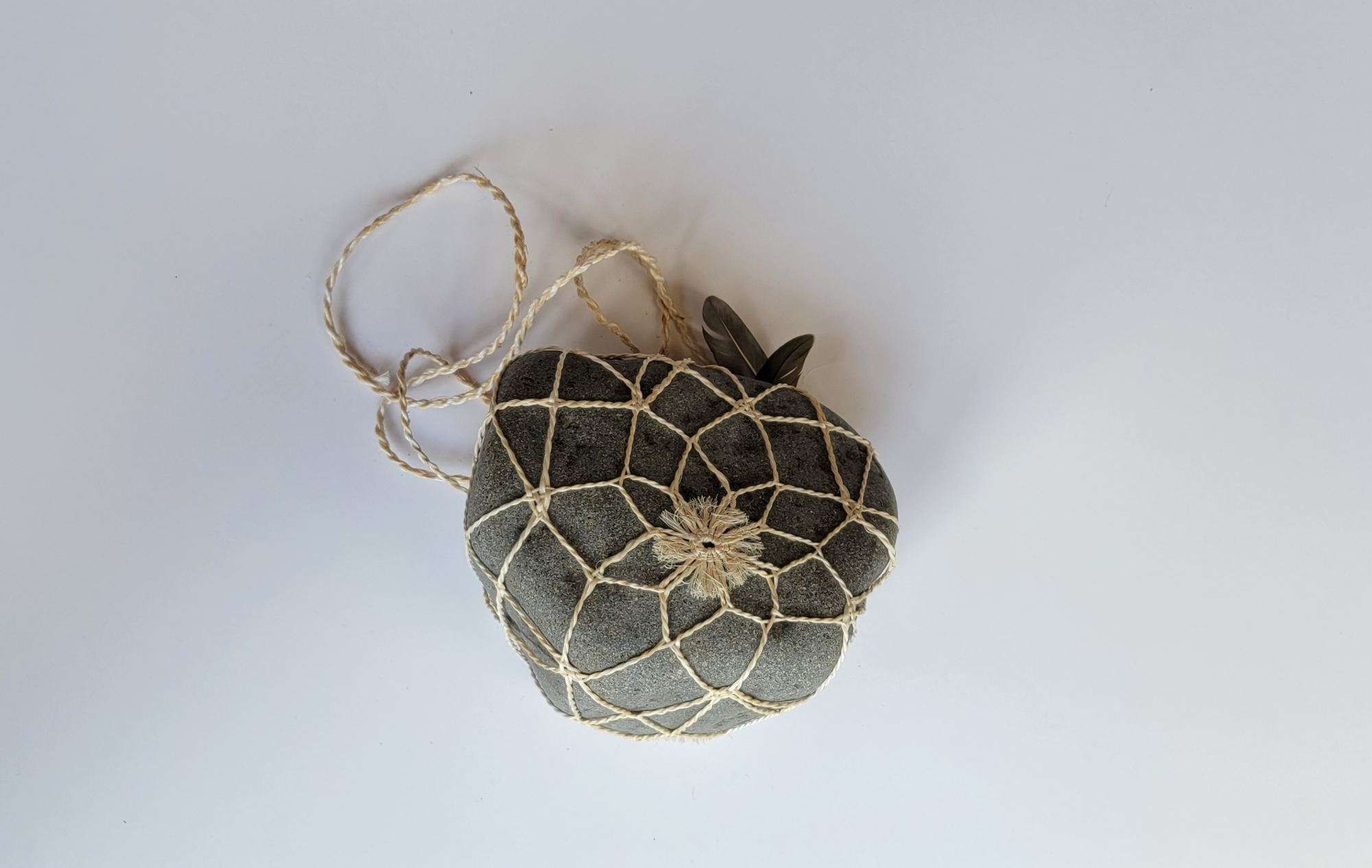
Note. The underside has a distinctive beauty of it’s own. There are seven connective points to the flower like central piece, which also suggests a navel. Three rings of seven Tohora Humpback Whales are etched on the other side.
Figure 144
Kōhatu Ra’iātea Ewe (Placenta, Afterbirth), 2022 – 2023
Muka and Kereru feathers

Note. The Ewe will be buried close to the origin of the Kōhatu, following customary practice.
Figure 145
The site of the awa where the Kōhatu was selected for return to Aotearoa
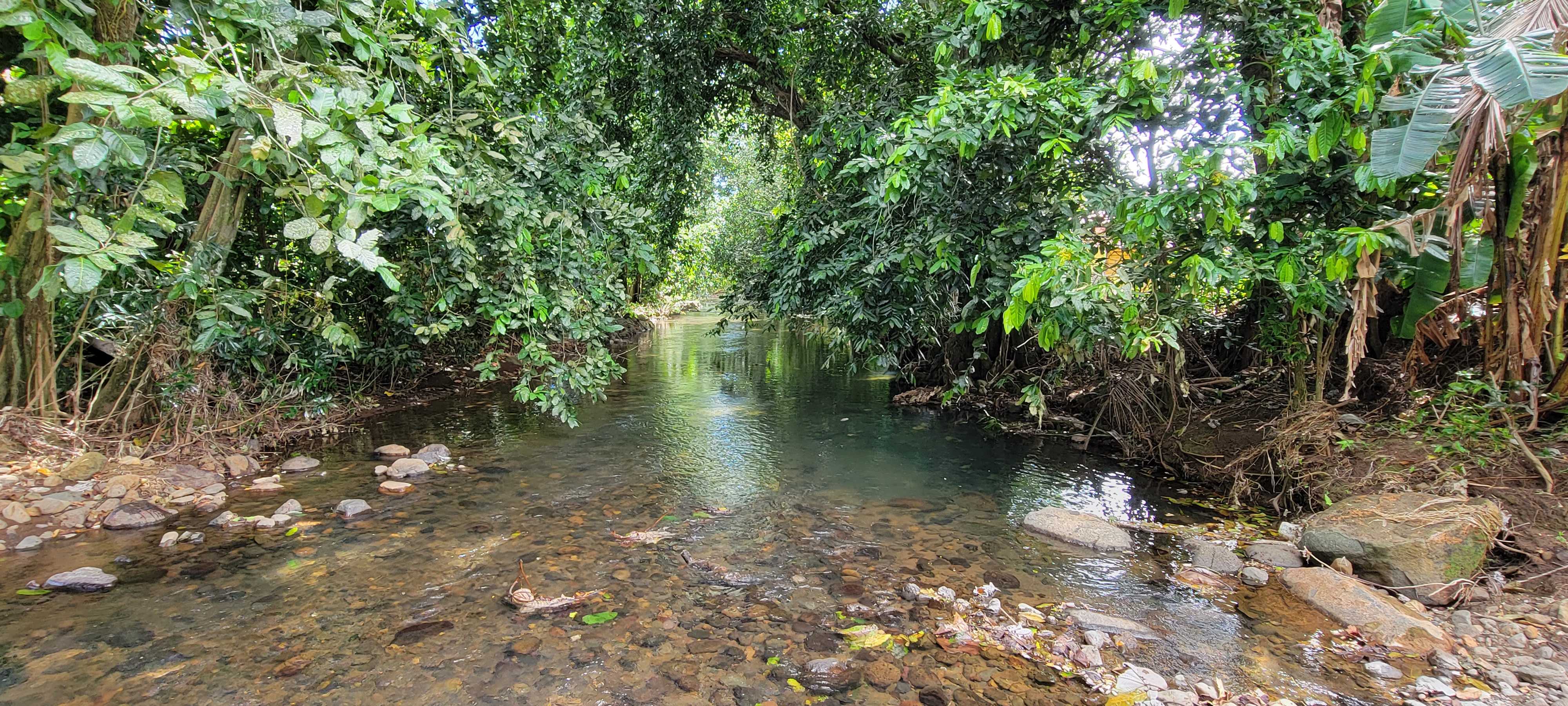
Note. The awa closest to Marae Taputapuātea, where the Kōhatu for return to Aotearoa was selected. Tihoti stated that this is the traditional site for selecting kōhatu from Taputapuātea.
Figure 146
Te Manu Ra’a o Ra’iātea The Sacred Bird of Ra’iatea

Note. The Kōhatu for return to Aotearoa, which is larger than the three Kōhatu for placement on Taputapuātea sites – it is 15cm wide by 19cm high and weighs six kilograms (the others are smaller – Hawai’i is 16cm wide by 13cm high and weighs three kilograms). The image above has been blurred deliberately, as the identity of the Kōhatu has not been resolved at the time of writing.
Anthropocene Experiment
Figure 147
Anthropocene Experiment

This Kōhatu was selected from the local Waiwhakaiho River, following the prompt from Maata Wharehoka to utislise local materials. The upper design is based on Otaha seen on Taputapuātea, Ra’iātea while the lower design is the star of Abraham Kahu Kawai’i, the Kahuna of Kawaihululani, my guide. The materials used were Kōhatu (river stone), Parihaka biochar pigment, Taranaki umu-fired earth pigment, in cellulose-based paints – all aligned with Anthropocene concerns as the fire used to cook the pigment was doused to make charcoal and buried hence sequestering the carbon in the ground.
 The website of Mahutoa 'Pasha' Clothier