
Ko whakapapa i Tahiti, Hitiaurevareva me Te Waipounamu. I whakapapa to Tahiti, Pitcairn and the South Island. Ko Moana tangata marara. I’m of the Moana diaspora. Ahunga hokorua tahi. Fortyone generations. Nga tupuna ahunga waru mahi toi aute. My eighth generation ancestors were tapa makers. Te Moana Nui a Kiwa toku Turangawaewae. The Pacific Ocean is the place I call home.
That eighth-generation connection to creativity is really important to me, and I see myself as working within this creative context. As a creative practitioner, curator and project manager working today, I’ve exhibited in 21 countries since 2004, and this site gives a compressed view.
The projects and events I worked on were mostly based around te taiao, the environment and engaging Indigenous – cultural bridging. Over the last twenty years, I’ve also been very involved in teaching and research at tertiary level.
To achieve all this I work with collaborators: Trudy Lane, Nina Czegledy, Te Matahiapo Indigenous Research Centre (particularly Dr Te Huirangi Eruera Waikerepuru, Inahaa TeUrutahi Iwimaire-Waikerepuru, Tengaruru Wineera and Kura Puke), Maata Wharehoka, Julian Priest, Andrew Hornblow and John Christini have all been long-term collaborators. Many more have been part of small teams to get the mahi (work done). Thank you so much everyone.

This image comes from a recent Aotea Utanganui Patea Museum show.The form is based on a Marshall Islands stick chart, which is used to teach about currents around an island. Marshall Islander Mau Piailug is widely credited with the rebirth of traditional navigation in Te Moana Nui a Kiwa Pacific Ocean.
He aha te mea nui o te ao? He tangata, he tangata, he tangata. What is the most important thing is the world? The people, the people, the people – Māori proverb.

A whakapapa (genealogy) workshop in Tuhura Christchurch Public Library, as part of Te Manu Ra’a o Ra’iātea.
The journey to the authentic self can be entered through the door of whakapapa or genealogy. Only you have your genealogy, it is specific to you. These are wisdoms given to me by Kawaihululani. After returning with Te Manu Ra’a, and conversations with Tihoti, a perfect context for whakapapa workshops was located.

Plant-based paints workshop at LAKA in Onehunga
Lately I have developed works that utilise plant (cellulose) based paints, natural and non-toxic pigments, and digitally created stencils with digital audio. This is a response to issues of the Anthropocene. There is a greater balance between natural products and computing.
It is not really feasible to come up with a list of do’s and dont’s in regard to creative response to climate change. The biggest things artists can do is fly less, eat less red meat and don’t drive the car so much.
The problem with resources in creative practice is they all go back to using server space and cooling server farms. If we take the bus that is a great thing, howver we will be seated on plastics and metal, powered most likely by diesel.
What got me in the end of thinking about this, was that keeping on going exploiting electronic media almost exclusively, wasn’t aspirational to younger generations. The simple fact is we have gone way too forward, to the point we need to go back.

Rose of Whales
This is a recent studio work, which has strong connections to my whakapapa (genealogy) through imagery and approach – it consists of a painted kōhatu (stone) on ahu (tapa). When exhibited, it will have radar sensor activated audio.
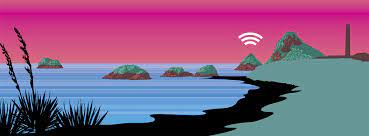
Radio interview by Mikaela Nyman
What’s the one place in the universe you could hear How bizzare by OMC, Over the rainbow by Israel Kamakawiwoʻole and Poi E by Patea Māori Club, mixed with whale song and quantum sounds? Click the image link above to go to the interview with the amazing Mikaela Nyman. We talk about the Interconnecting and recent projects.

Weather Choir : Koea o Tāwhirimātea
This project was part of a world wide project to engage with climate change issues using contemporary art. The World Weather Network (Art Angel UK) and Te Tuhi The Mark Contemporary Gallery with Curator Janine Randerson commissioned Phil Dadson to create a work. Phil’s idea was to place wind harps in a number of places across Te Moana Nui a Kiwa Pacific Ocean, including Tongatapu, Kingdon of Tonga; Upolo, Samoa; Rarotonga, Cook Islands; Liku, Nuie; and Taranaki, Tāmaki Makaurau Auckland, Whakatane and Haumona in Aotearoa New Zealand. When he asked if I would like to collaborate I jumped at it, because so often there are art and environment projects focused on climate change that leave out the very islands most impacted: those of the Pacific. I am grateful to the Parihaka Trust for permitting the loction of a wind harp on Parihaka.
Here is a link to the Te Tuhi The Mark e-publication for the entire project. The Aotearoa New Zealand collaboration is on page 74.
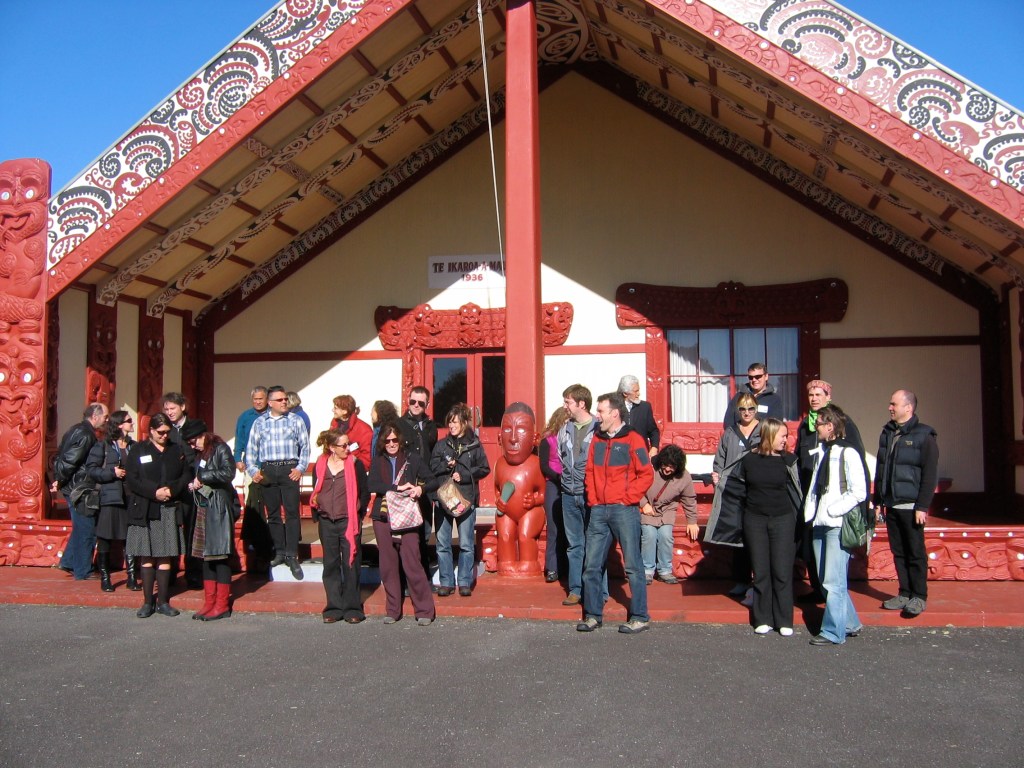
SCANZ 2006 – 2018
Solar Circuit Aotearoa New Zealand was a residency, workshops and presentation event I co-founded with Trudy Lane, Nina Czegledy and Adam Hyde in 2006. Our cultural partners were Te Matahiapo Indigenous Research Collective. The event was focussed on cultural bridging, electronic art and environment, held every two years, with 2020 cancelled due to the Covid19 pandemic. 2018 was held at Parihaka Papakainga, a place of great significance and a collaboration with Maata Wharehoka.
 Mahutoa 'Pasha' Clothier