
In Māori, wa is space and wa is time
Something the West found out from the work of Albert Einstein at the start of the last century. It is important to acknowledge Indigenous beliefs particularly where there is precedence to the West.
These works feature the renowned Ryoanji Temple stone garden in Kyoto, contrasted to photos taken from the Shinkansen ‘Bullet Train’ when traveling there.
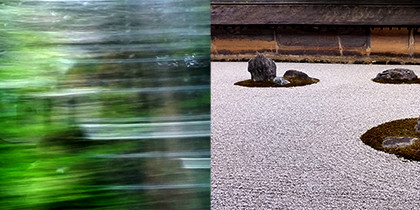
Reality looks very fluid on the left side of the image, while the right side appears timeless. So, which is space and which is time?
The past, present and future are only illusions, even if stubborn ones – Albert Einstein
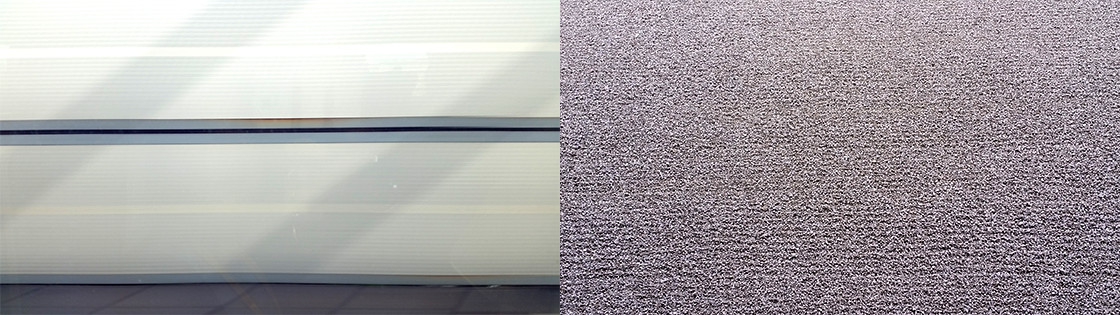
Line and dot
Monks of the temple meticulously rake the stones to a kind of perfection.
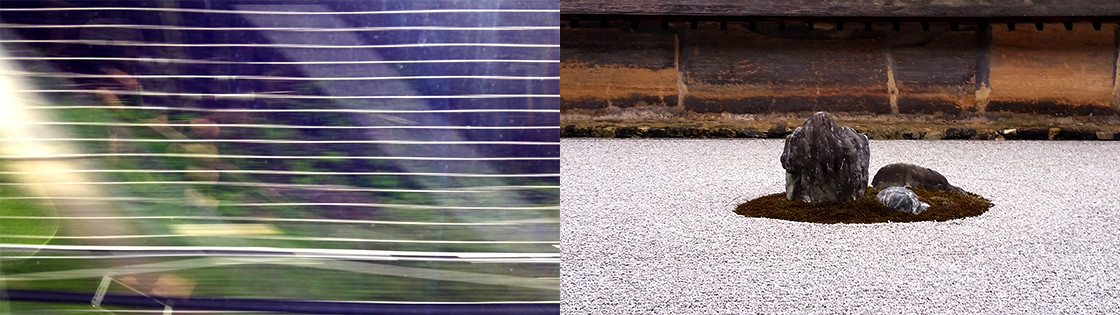
Arrow of time
The lines on the left don’t actually exist but are produced by freezing the speeding moment. It is said there are fifteen rocks in the Ryoanji rock garden, however only fourteen can be counted. Where might the fifteenth be?
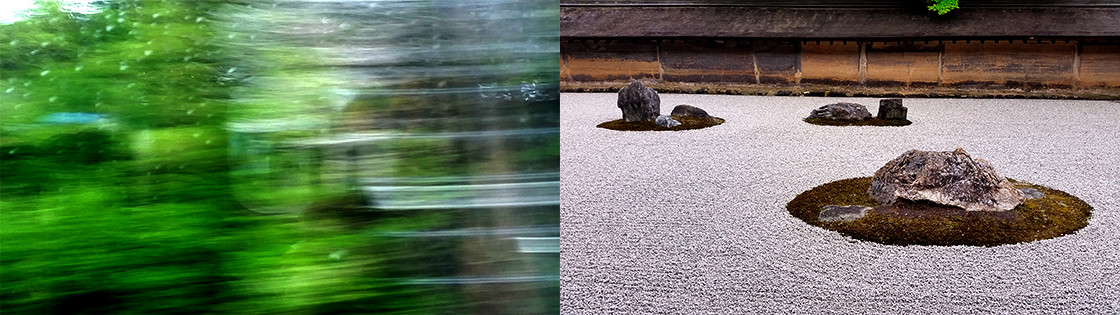
Pool – Ripple
Reality is a green pool of gushing motion, and ripples extending from rock and moss.

Pool – Ripple II
A stripe, a pool, a pool of stones, a rock garden and a temple. Spacetime.
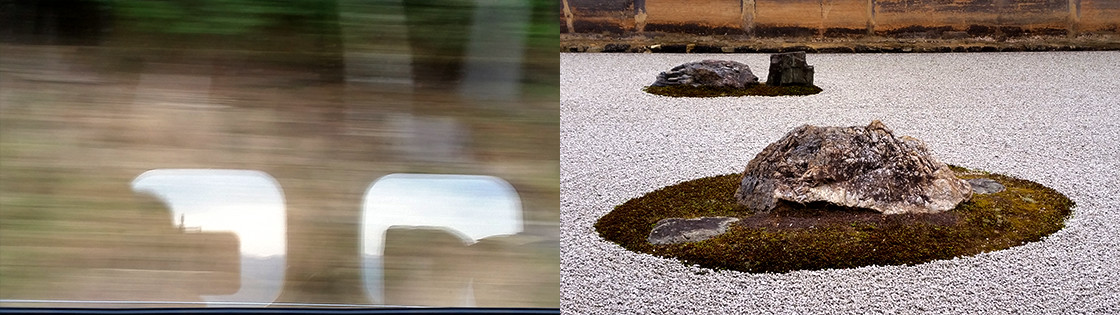
Pool – Ripple III
A stripe, a pool, a pool of stones, a rock garden, a temple and a reflection. Timespace.

Distance makes a difference
When travelling at speed, things close blend to a blur, while that further away remains distinct. Space and time are relative to speed and position.
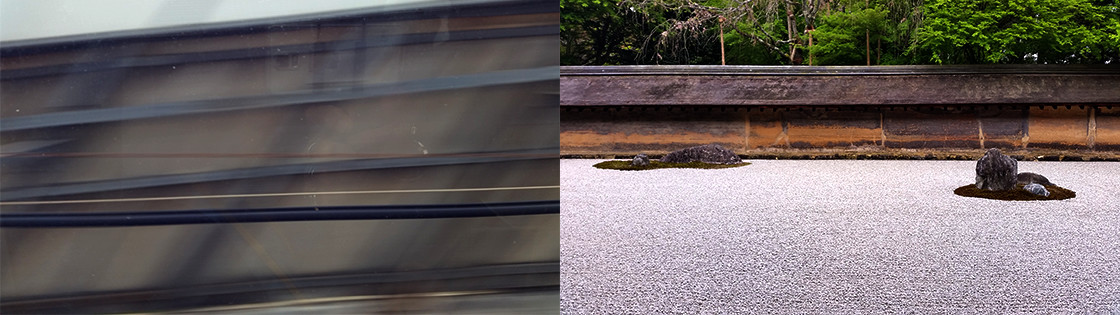
Light bending
If I travelled past Ryoanji Temple at Shinkansen speed, would the garden look more like the imagery on the left?
 The website of Mahutoa 'Pasha' Clothier