
Te Manu Ra’a o Ra’iātea is a taonga (treasure) and a koha (gift) from tūpuna (ancestors) to us all, guided by Tihoti and the energies of Taputapuātea Marae, Ra’iātea
It was agreed in discussion, that the kōhatu (river stone) Te Manu Ra’a o Ra’iātea would provide a context to open up to Tapu (Sacred) and Noa (Mundane), allowing for engaging with tūpuna (ancestors).

Bunyan trees often have associated marae atea (stone platforms) at Moana cultural sites. This Bunyan on Taputapuātea is adjacent to the marae for placing rahui (prohibitions on practices).
If your work directly engages tūpuna, you must acknowledge tapu and noa – Albert Refiti
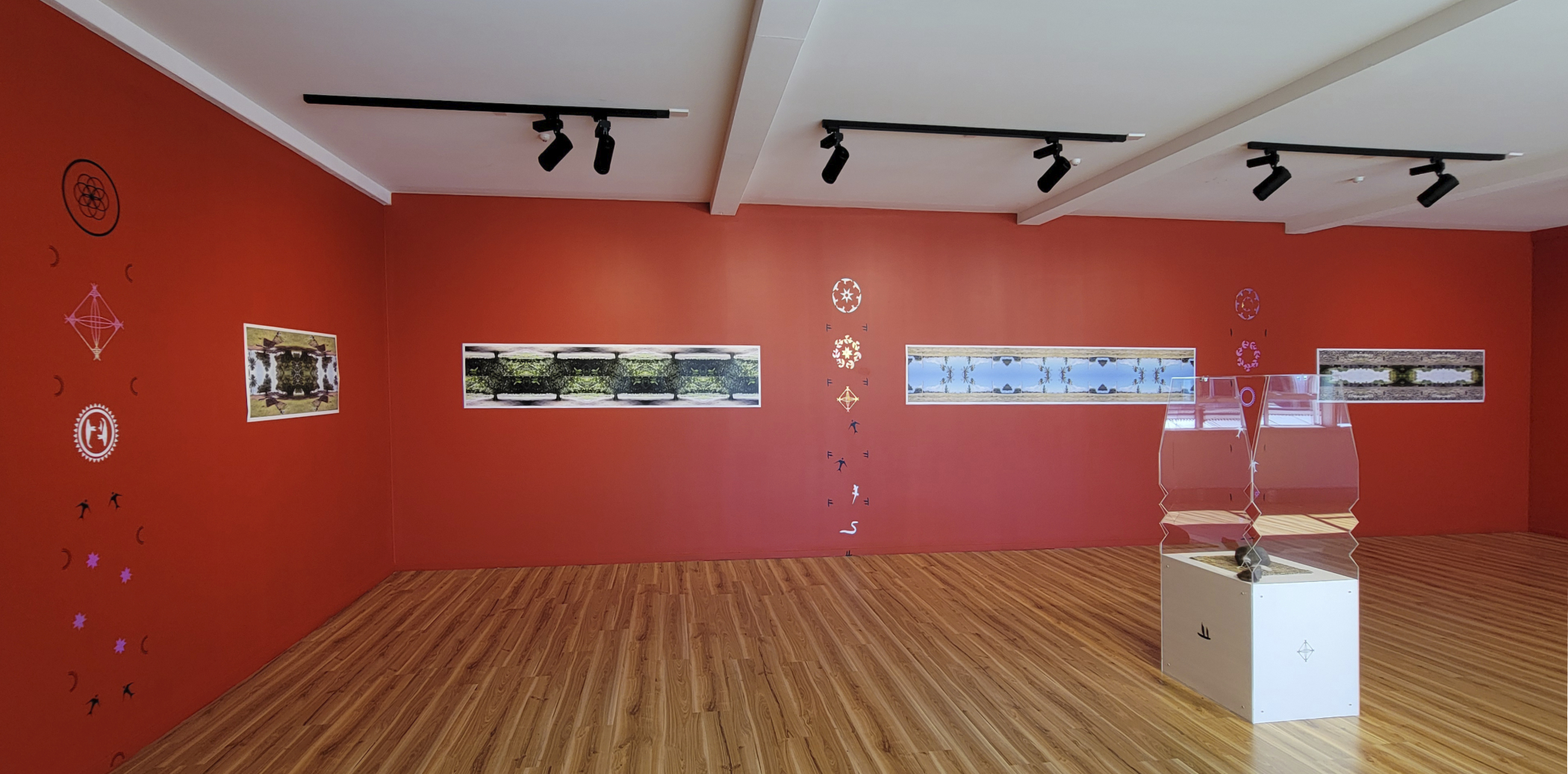
Te Manu Ra’a o Ra’iātea
Presented in Fibre Gallery Ōtautahi Christchurch, featuring images of the sacred marae of Taputapuātea on Ra’iātea and the kōhatu (stone) brought back under the guidance of Tahu’a (Priest, Expert) Tihoti. The kōhatu Te Manu Ra’a o Ra’iātea provides a context to open up to engage with tūpuna and host whakapapa workshops. The workshop was held at Tūranga Christchurch Public Library.

Kōhatu (stones), Pou and images from Taputapuātea
Te Manu Ra’a on a whariki (mat) woven by Kim Kahu. At left is one of two pointer kōhatu, which together point north regardless of the orientation of the plinth. Knowing north was a fundamental piece of knowledge for Moana peoples, an orientation to te taiao, the cosmos.

Whakapapa (genealogy) workshop
There were various motivations for people coming to the whakapapa workshop. The process of finding your whakapapa or genealogy takes time and research, and it turns out libraries are really well equipped with resources – it would be possible to come in with a snippet of a story about someone in the generations before you, and develop a whakapapa from that start point. The other thing about whakapapa is that it involves the authentic self – your whakapapa is your genealogy no matter who is in it, or how good or bad some of them might have been. The generations before you are a fundamental context to being who you really are.
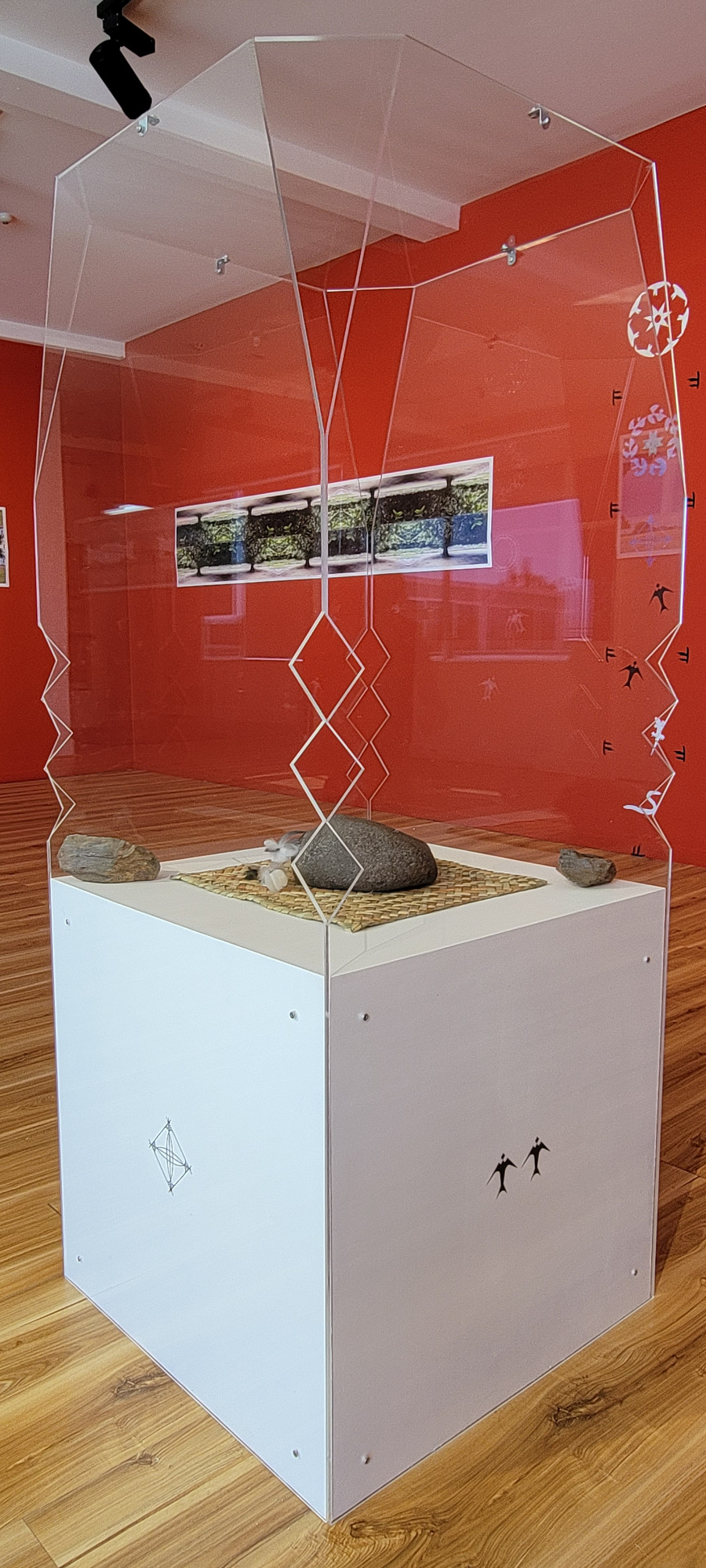
Te Manu Ra’a and plinth
Decided to go for it on plinth design, it went down well.

Pou Whitianga
Placing a kōhatu on Taputapuātea Marae was part of a journey retracing navigational songlines, as Kawaihululani put it so beautifully. So, I have one for placement on Kapukapuakea on Hawai’i, and one (also bound by Kim Kahu) has been buried at the site of Aotearoa Taputapuātea. After placement on Taputapuātea Ra’iātea, two otaha – magnificent frigate birds – swooped over us. After burying the kōhatu at Whitianga, two kereru wood pigeons flew above us.
There is an origin to the imagery of the Pou. Beginning at top is the ‘seed of life’ image, 3000 years old at least, and etched onto to the kōhatu buried at Whitianga. There is a point at which all of humanity become one. Next is a diagram of a Magel or Marshall Islands stick chart, used for teaching about currents around islands, and not taken on board. Below that is an image of a Humpback mother and calf, plus a male inside the 32 house taditional Kaiwhakatere (Navigator) compass. This compass was held in the mind body, with Tahiti from Hawai’i being three houses around from south, for example.
As part of the journey to Ra’iātea, I also visited my motu tūpuna ancestral island, Hitiaurevareva (colonised as Pticairn). It was there on my first full day, I saw the mother and calf, and one my final day I witnessed a humpback breach, where they use their flippers as wings and propell themsleves out of the ocean.
Next come two otaha, symbolic of birds that swooped over us after the ceremony was completed. This is followed by Mahutonga, Crux or the Southern Cross, really important to navigators. Then two more birds.
Each one of the four Pou or Posts told a story in this way, they formed markers in my journey.

Sound: radar activated soundscape
The atmosphere of Taputapuātea Ra’iātea is completely different from central Otautahi Christchurch, so I made a sound track to amplify some of the energies I had sensed. The whole exhibtion was credited to me and Whanau, extended family. Acknowledgements and thanks were going to those who directly touched the project: Kohana Clothier, Kim Kahu, John Christini, Josiah Jordan, Tihoti, Kawaihululani, Paul Cook, Annie Overton, Clothier Fanau, Nina Oberg-Humphries, Thomas Ashcraft, CERN, NASA, ESA, Mark Williamson, Ngā Tohorā o Hitiaurevareva me Hawai’i, Ngā Otaha, Ngā Mokomoko me Tuna o Ra’iātea ki Huahine, Ngā Manu me Ngahere o Aotearoa, Ngā Whetu ki Te Rā me Marama, Ngā Tupuna.

Taputapuātea
The image above shows the main marae at centre, above it is Hauviri (the marae for the investiture of the Tamatoa dynasty), and at top right on the edge of the sea is Opu-teina, the navigator marae. This link takes you to more on the project, from pages related to my PhD. Te Manu Ra’a o Ra’iātea is the first exhibition post PhD.
 The website of Mahutoa 'Pasha' Clothier