
Interconnecting: pasha@patea
This page provides documentation from the exhibition at Aotea Utanganui Patea Museum. Rather than simply being a one-person exhibition, and engagement with whakapapa (genealogy) led to the incorporation of works by my extended whanau (family) the majority of whom are creative – on Hitiaurevareva Pitcairn, creativty is enmeshed with getting by. The Interconnecting show really lays out the platform for my current work.
Making chnges away from Western conventions followed from considering whakapapa. Whakapapa relates not just to human genealogy, but recognises the interconnection to all things. This means plants, mountains, buildings and wildlife can all be part of whakapapa and indeed buildings and aplants have whakapapa too.
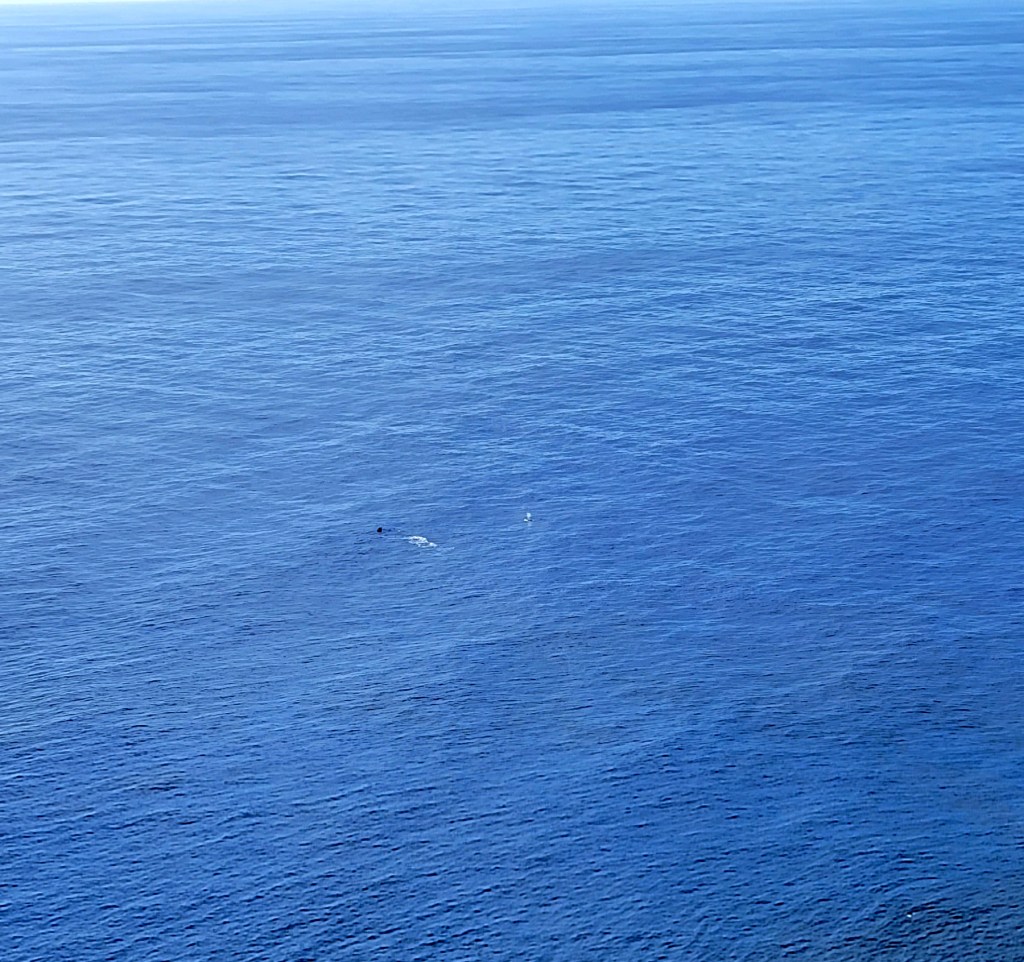
Ngaru Whenua wave forms off Hitiaurevareva. Note the way the wave forms stay distinct even when overlapping. The small white dots are a Humpack whale and calf.

A view of part of the installation Interconnecting: pasha @ patea showing the cabinet in the foreground containing human, wild life and geological specimens bearing imprints. Imagery related to tupuna (ancestors) can be found on the wall and the pou in the centre of the space. Engaging with tupuna became one of the most significant trajectories of the PhD, along with Indigenous Practices in the form of traditional Moana navigation, cosmology and the Anthropocene.

Above at left is a Georgian writing bureau contemporary with the Mutiny on the Bounty saga 1790; on the left wall are tupuna images dating to 1830; my grandmother, and my parents wedding photo of 1948. The cabinet at middle back contains artefacts made by whanau (extended family) on Hitiaurevareva – the island on which the Tahitians and sailors on HMAV Bounty made their settlement.
This is Hitiaurevareva as it is known on Tahiti and Huahine, from the aft deck of the Silver Supporter supply and passenger vessel to the island colonised as Pitcairn. In Marquesan oral heritage it is known as Mata Ki Te Rangi, eyes or edge of the sky

Reverse shot of the main space, revealing the kōhatu that anchors the pou.

Rocks touched by plants, fish and humans ranging from millions of year old fossils to Lapita pottery fragments ca3000 years old, to painted kōhatu by Jo Tito and Kohana Clothier, my daughter (whakapapa traverses both forwards and backwards).
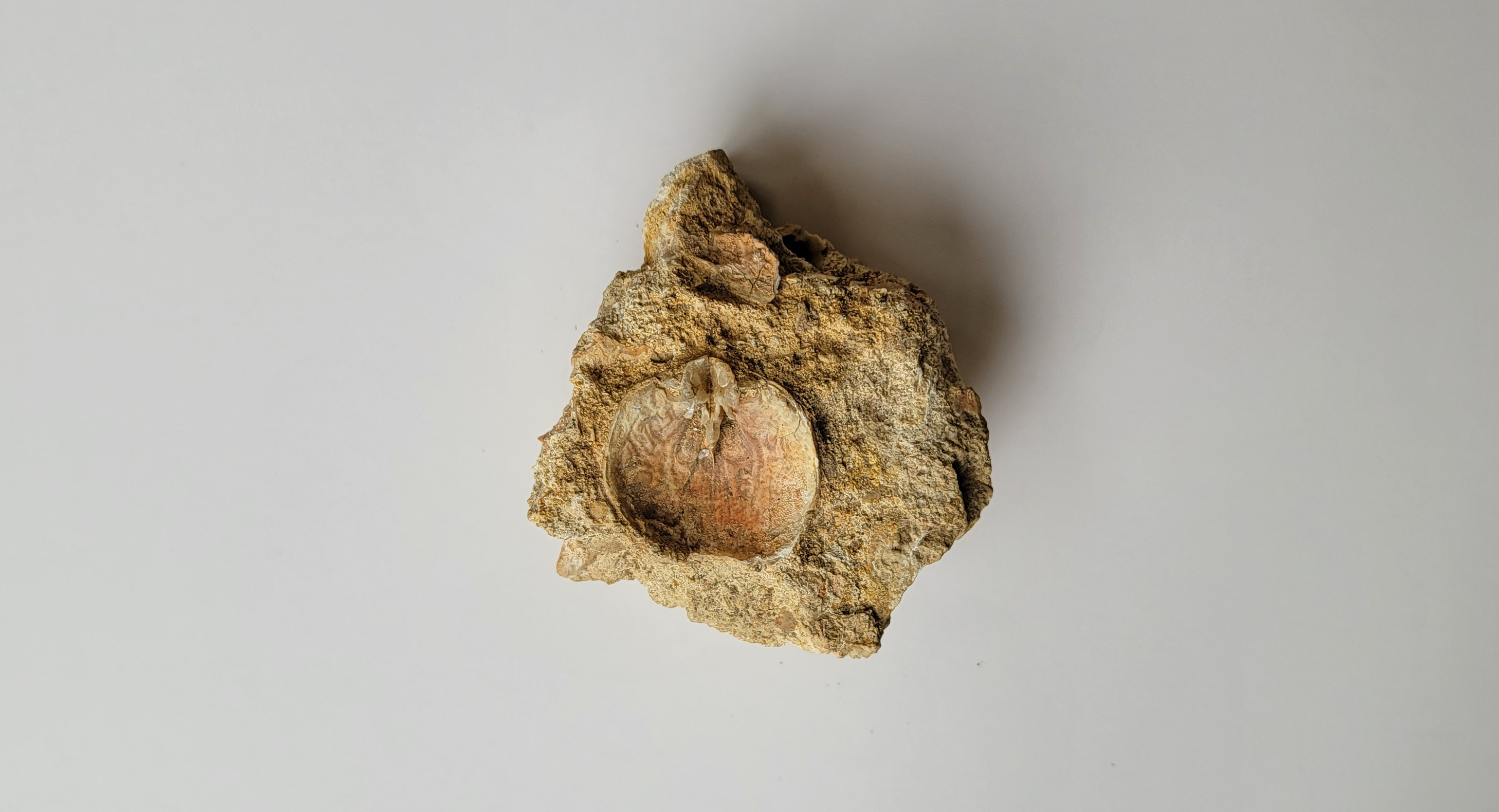
A 2 million year old fossil (Institute of Geological and Nuclear Sciences, 2023) of a crab impression.

This I speculate to be a weight for holding an eel snare in place. I found it as a child on my family urban property, which was a dried river bed presumably a consequence of draining the Ōtautahi (Christchurch) swamp.

This is a carved shark with inlaid shark teeth by Randy Christian who lives on Hitiaurevareva. When I asked how the teeth were obtained, after assuming sharks might be washed up on a beach, I was informed the creative process begins with “catch the shark.”
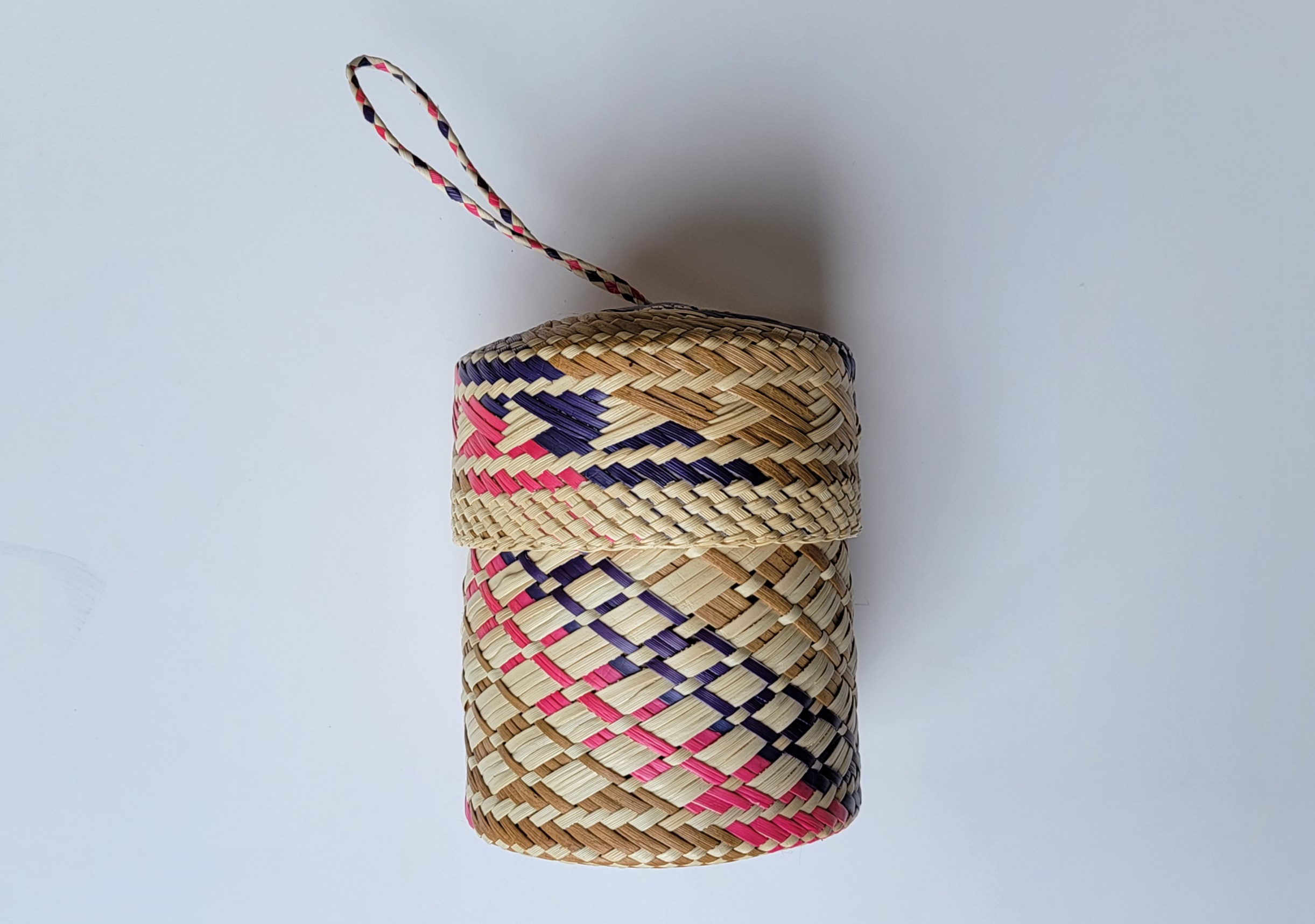
A kete by Daphne Warren reveals the direct heritage of making within the heritage of the wahine (women) of the Bounty.

My father’s WW2 Morse Key – he was an operator in the Royal New Zealand Air Force and stationed on Norfolk Island, where he and my mother met. She swam into him at Emily Bay a well known and sheletered beach inside a reef that is popular with islanders.
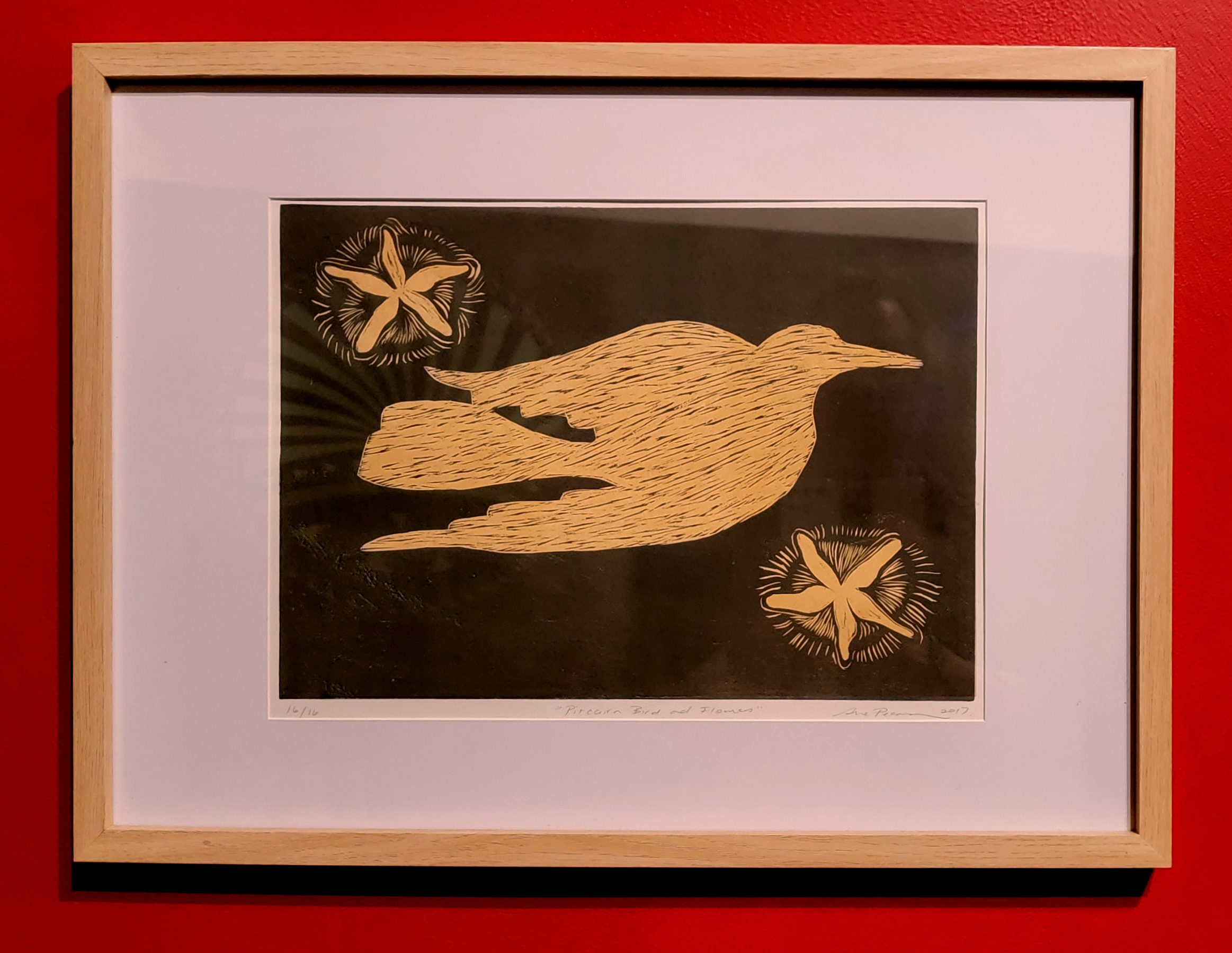
This woodcut on rag paper is by Sue Pearson, who also grows the trees to make her own ahu (tapa). She recently relocated to Norfolk Island, so needs to commence the process beginning with the trees, once more.

This Georgian writing beareau is contemporary with artefacts from HMAV Bounty – there is an item of furniture in a Hitiaurevareva household depicted in the 1820’s, that has identical footing detail. I have speculated the item of furniture depicted may have come from the Bounty, as the transportation of such a large item in the 1820’s seems unlikely, though is possible.

The saga of the Bounty entered into popular culture through five feature films and numerous books. Here it is as one of Royal Doulton’s historical ships series.

This whanau view is an authenticated print created in Paris in the 1830’s based on drawings made on the island in the 1820’s. Clockwise from left John Adams, George Young, Hannah Young nee Adams with child, Mauatua, and Tinafornea. All are tupuna except for Tinafornea.

My grandmother Christine Rose Young nee Quintal. This is a documentation image from the exhibition and a reflection of The Flower of Life can be seen in part. This is one sense of diffraction – looking through one to another.
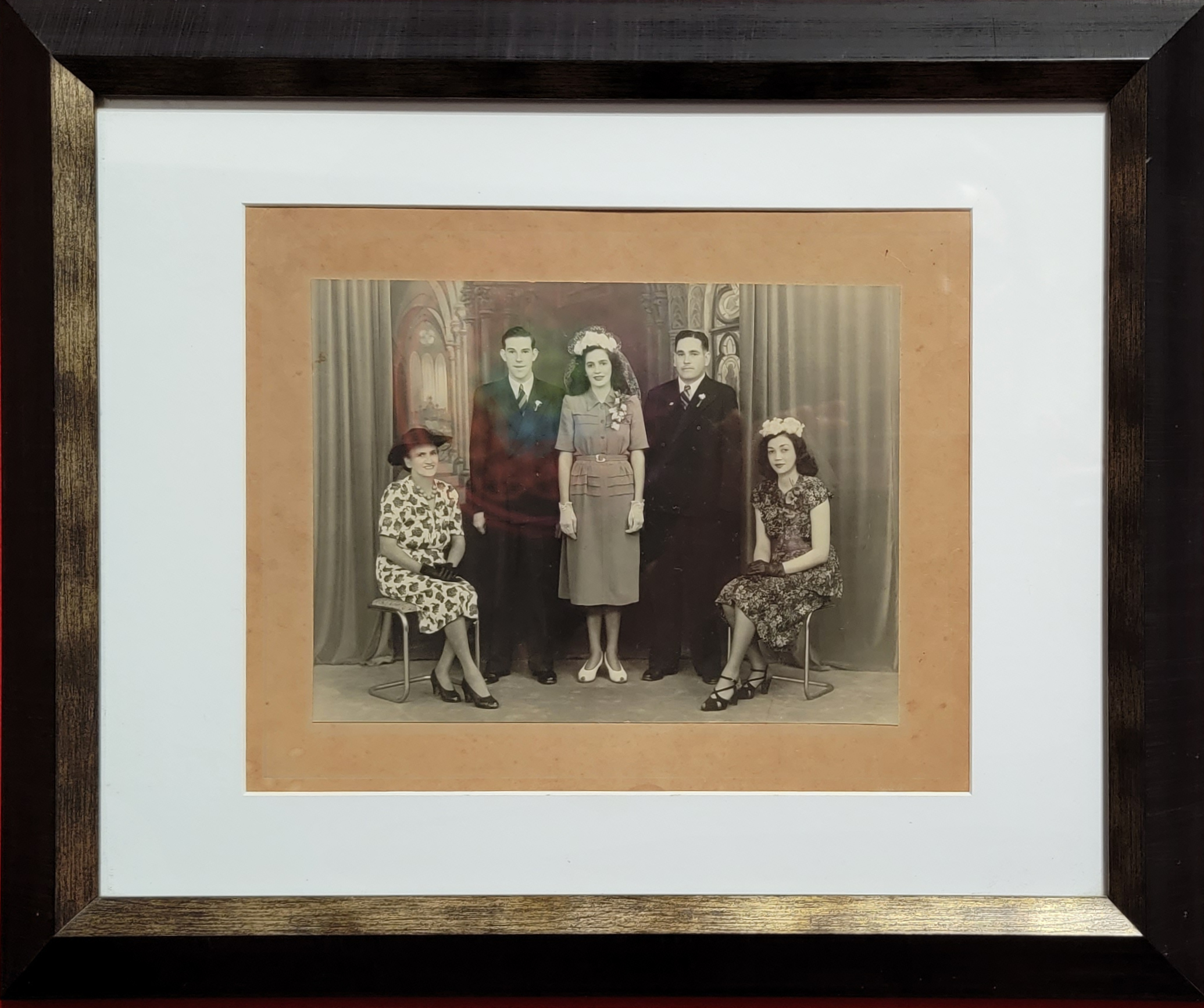
My parents wedding photo in 1948 in Tamaki Makaurau. On the right is my Auntie Alma, who gave me the nickname Pasha when I was a child. Again The Flower of Life is reflected in the documentary photo.
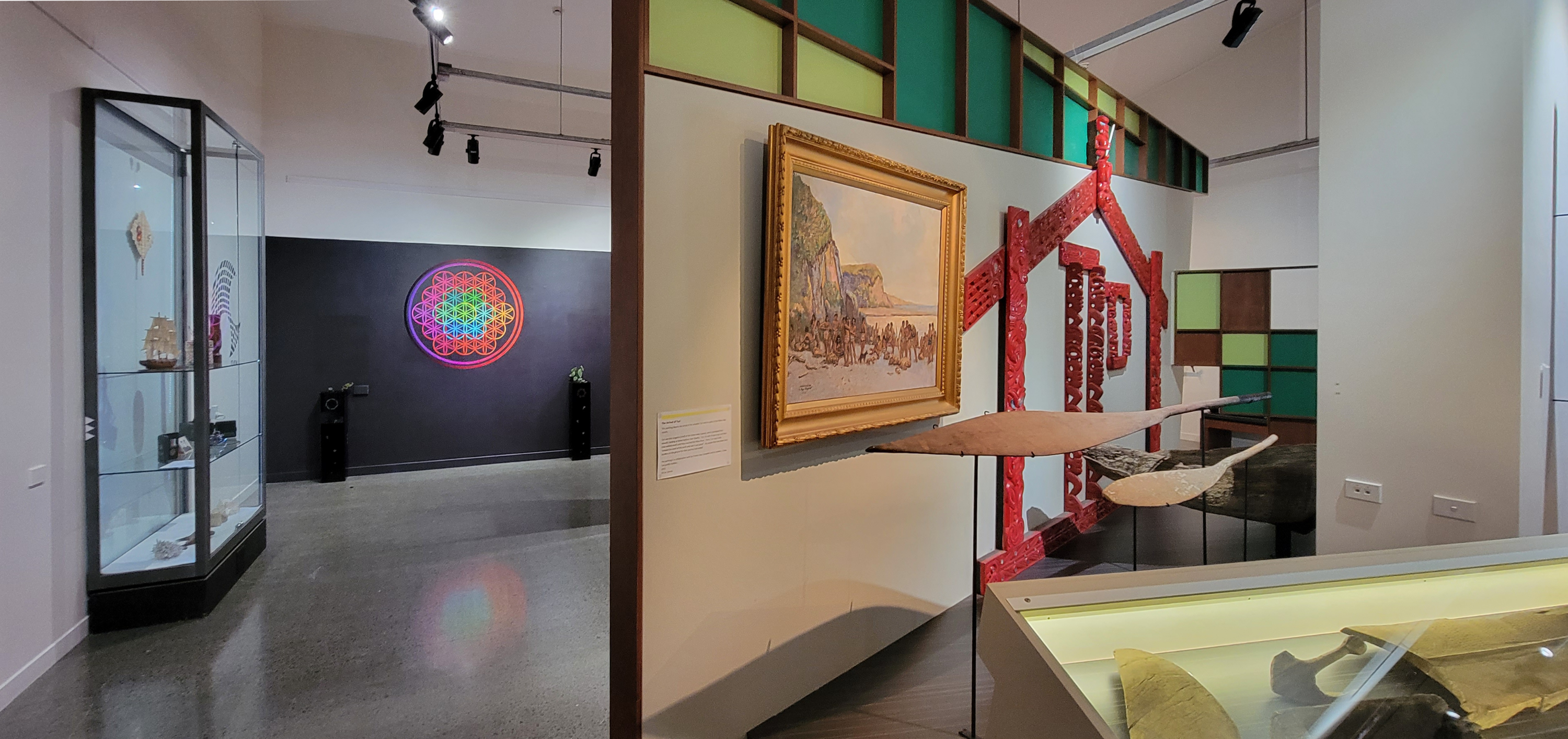
A diffraction of Interconnecting: pasha @ patea and the Aotea Utanganui Patea Museum collections of important artefacts including its significant waka holding at bottom right.


These three images were created for the blck wall of the gallery. The image at right is a Tahitian moko pattern called ‘Tahitian sunrise. ‘
References
Deleuze, G. & Guattari, F. (1987). A Thousand Plateaus. Minneapolis: University of Minnesota Press.
Ioannidis, A.G., Blanco-Portillo, J., Sandoval, K. et al. Native American gene flow into Polynesia predating Easter Island settlement. In Nature 583, 572–577 (2020). https://doi.org/10.1038/s41586-020-2487-2
O’sullivan, S. (2001). The Aesthetics of Affect in Thinking Art Beyond Representation. ISSN 0969-725X print/ISSN 1469-2899 online/01/030125-11 Taylor & Francis Ltd and the Editors of Angelaki. DOI: 10.1080/09697250120087987
Reynolds, P., & Wheeler, V. (2022). Mā’ohi methodologies and frameworks for conducting research in Mā’ohi Nui. AlterNative: An International Journal of Indigenous Peoples. Vol 18 (4), 488–495. https://doi.org/10.1177/11771801221114999
Spennemann, Dirk H.R. (1998). Essays on the Marshallese Past Second edition. Albury: Charles Sturt University. http://marshall.csu.edu.au/Marshalls/html/essays/es-tmc-2.html
Todd, Z. (2016). An Indigenous Feminist’s Take on the Ontological Turn: ‘Ontology’ Is Just Another Word For Colonialism. In Journal of Historical Sociology Vol. 29 No. 1. DOI: 10.1111/johs.12124
Waikerepuru, H. (2011). Te Hihiri o Te Taiao. http://www.intercreate.org/huirangi-waikerepuru/
Wilmshurst, J. Hunt, B. Lipo C. and Anderson, A. (2011). High-precision radiocarbon dating shows recent and rapid initial human colonization of East Polynesia. In Proceedings of the National Academy of Sciences February 1, 2011 vol. 108, no. 5, p 1815–1820.
Wilson, S. (2008). Research is Ceremony: Indigenous Research Methods. Black Point:Fernwood Publishing.
Wilson-Hokowhitu, N. (2019). The Past before Us: Moʻokūʻauhau as Methodology. [ED.]. Honolulu: University of Hawai’i Press.
 The website of Mahutoa 'Pasha' Clothier