
Hawai’i
Hawai’i is one of the three kōhatu destined for three Taputapuatea marae sites throughout Te Moana Nui a Kiwa (Pacific Ocean).
The Kōhatu works are a collaboration with Kim Kahu and Kaumatua (Elders) at each site. Where possible this includes Tohunga (Priests). The history of Polynesia after Colonisation is difficult, and one Taputapuatea site maintains it’s mana of integrity today: Taputapuatea on Ra’iatea.

In the early Moana period there was a strong link between Hawai’i and Tahiti. The image above is derived from the ta moko pattern called ‘Tahitian sunrise’ and was worn on the buttock. It is suggested a tupuna (ancestor) wore this ta moko, but it is difficult to verify. Certainly a buttock tattoo was worn by tupuna and certainly this was a pattern of the era.
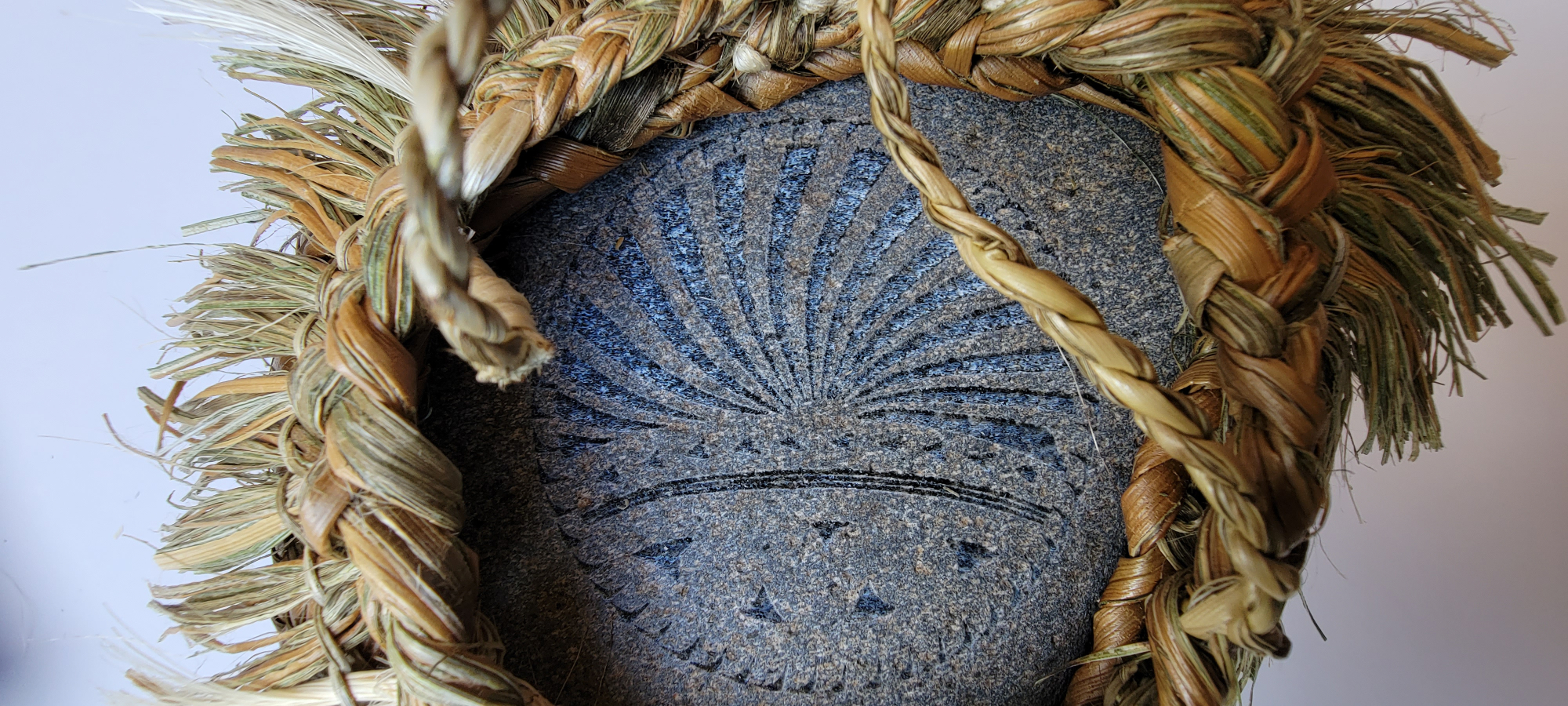
This is the Tahitian sunrise pattern etched into Kōhatu and bound by Kim Kahu. The kōhatu were selected from the Waiwhakaiho Awa (River) with apropriate karakia (prayer).
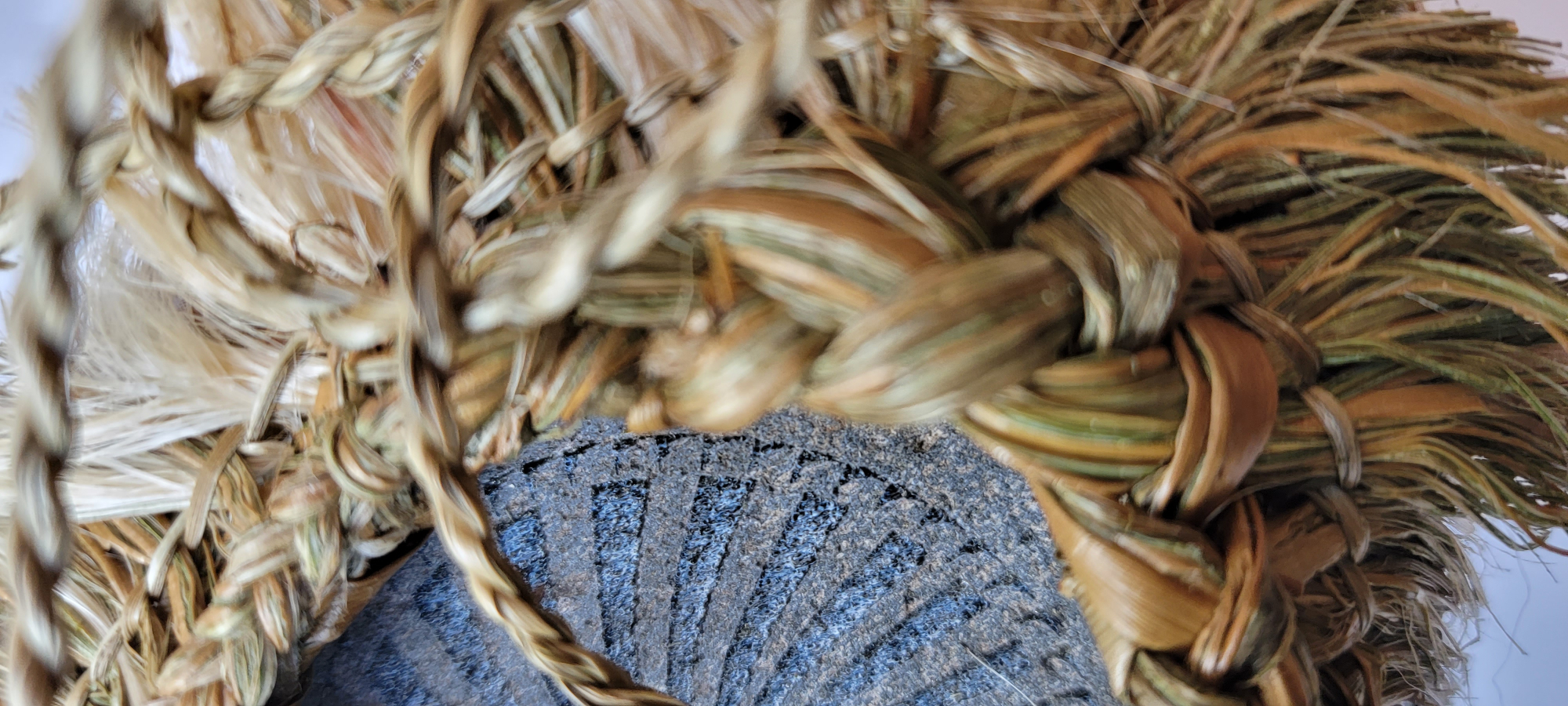
A detail revealing the flow of energy.
It was my great fortune to collaborate with Kim Kahu.
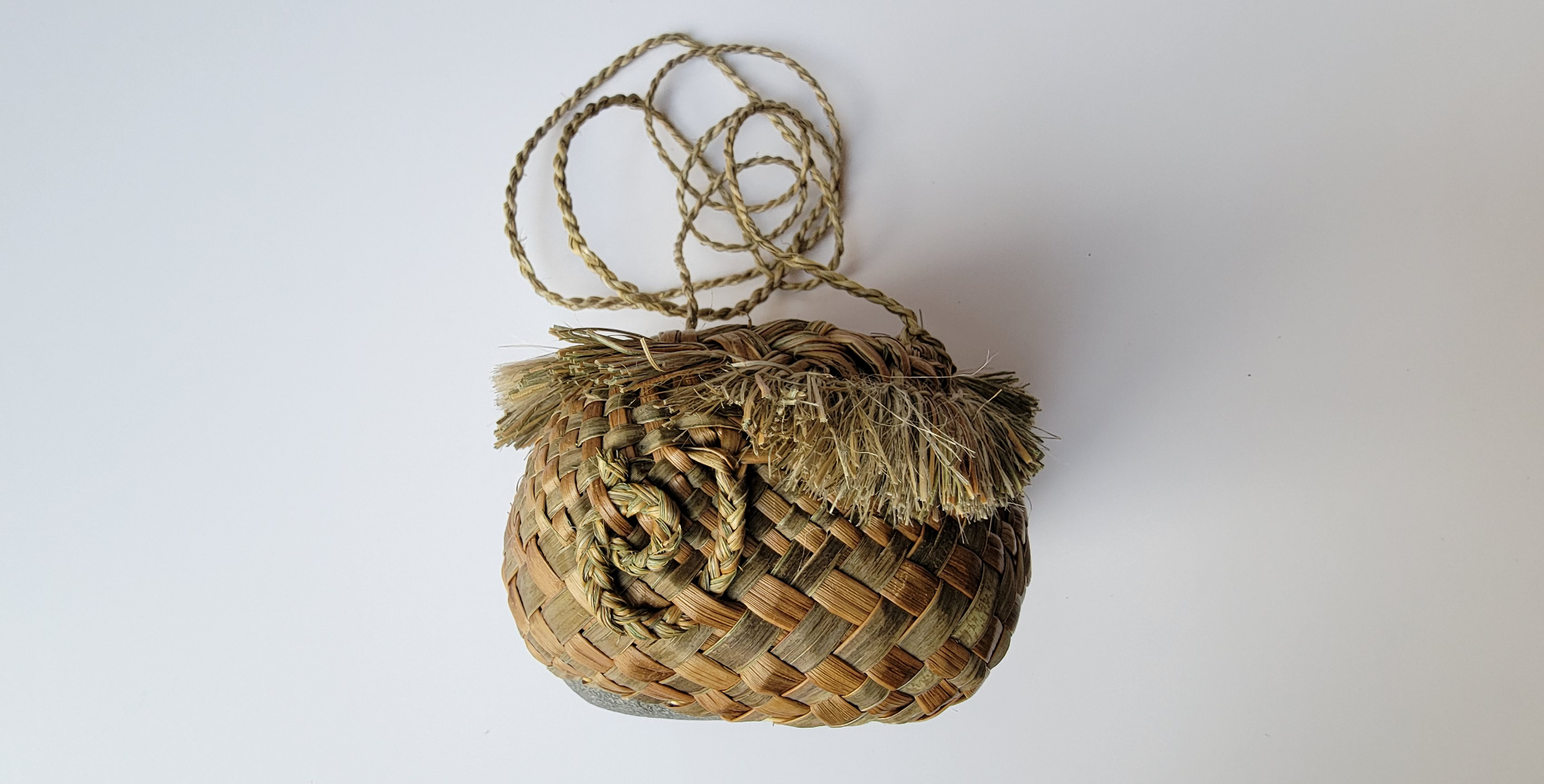
The exegesis refers to knowledge as dimensional which in simple terms means looking from multiple angles, above and below. This type of scrutiny is well rewarded in the Kōhatu works.
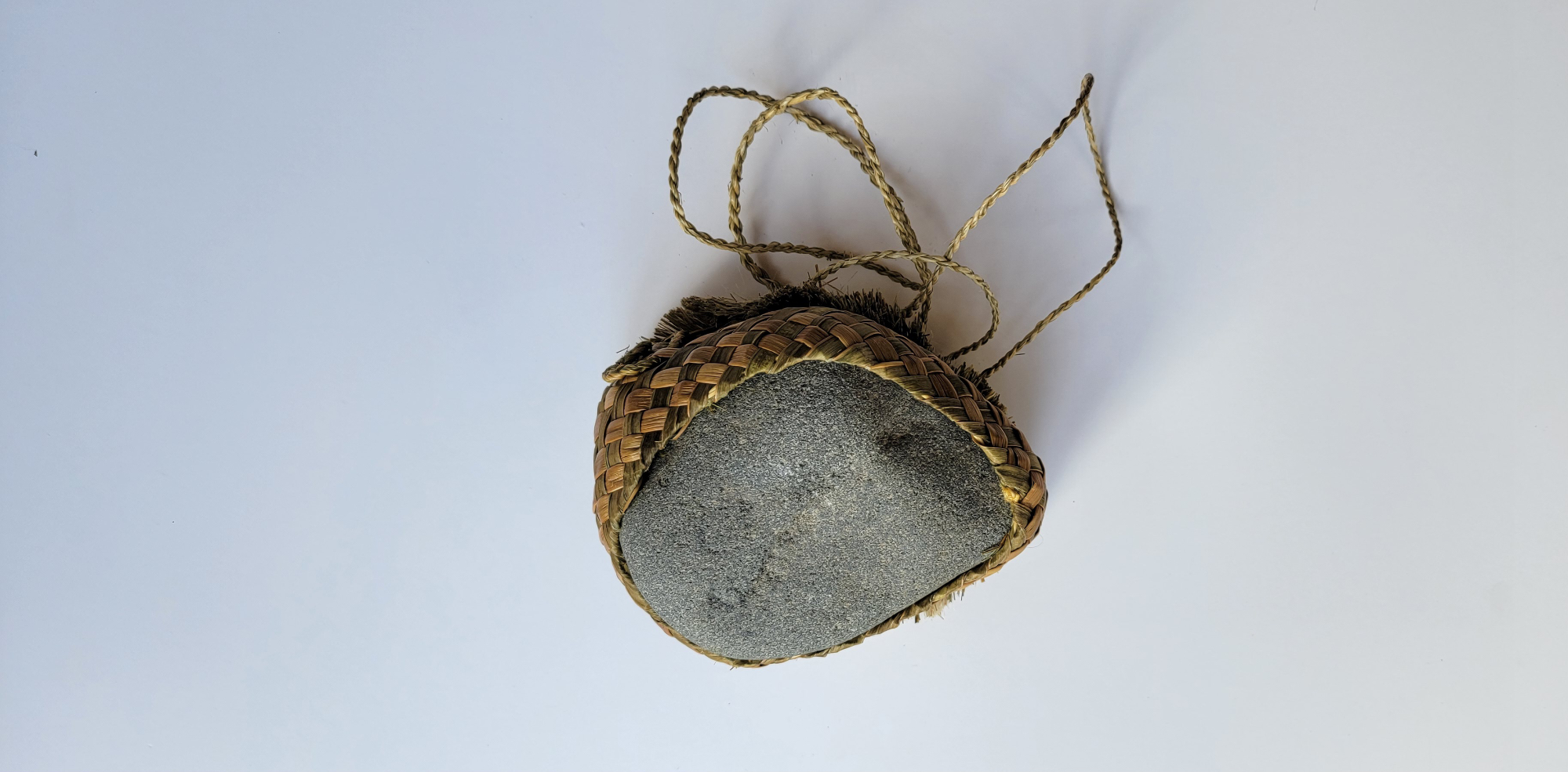
Where there is something, there is also nothing. But this is often not as explicit as in the image above.
References
Deleuze, G. & Guattari, F. (1987). A Thousand Plateaus. Minneapolis: University of Minnesota Press.
Ioannidis, A.G., Blanco-Portillo, J., Sandoval, K. et al. Native American gene flow into Polynesia predating Easter Island settlement. In Nature 583, 572–577 (2020). https://doi.org/10.1038/s41586-020-2487-2
O’sullivan, S. (2001). The Aesthetics of Affect in Thinking Art Beyond Representation. ISSN 0969-725X print/ISSN 1469-2899 online/01/030125-11 Taylor & Francis Ltd and the Editors of Angelaki. DOI: 10.1080/09697250120087987
Reynolds, P., & Wheeler, V. (2022). Mā’ohi methodologies and frameworks for conducting research in Mā’ohi Nui. AlterNative: An International Journal of Indigenous Peoples. Vol 18 (4), 488–495. https://doi.org/10.1177/11771801221114999
Spennemann, Dirk H.R. (1998). Essays on the Marshallese Past Second edition. Albury: Charles Sturt University. http://marshall.csu.edu.au/Marshalls/html/essays/es-tmc-2.html
Todd, Z. (2016). An Indigenous Feminist’s Take on the Ontological Turn: ‘Ontology’ Is Just Another Word For Colonialism. In Journal of Historical Sociology Vol. 29 No. 1. DOI: 10.1111/johs.12124
Waikerepuru, H. (2011). Te Hihiri o Te Taiao. http://www.intercreate.org/huirangi-waikerepuru/
Wilmshurst, J. Hunt, B. Lipo C. and Anderson, A. (2011). High-precision radiocarbon dating shows recent and rapid initial human colonization of East Polynesia. In Proceedings of the National Academy of Sciences February 1, 2011 vol. 108, no. 5, p 1815–1820.
Wilson, S. (2008). Research is Ceremony: Indigenous Research Methods. Black Point:Fernwood Publishing.
Wilson-Hokowhitu, N. (2019). The Past before Us: Moʻokūʻauhau as Methodology. [ED.]. Honolulu: University of Hawai’i Press.
 The website of Mahutoa 'Pasha' Clothier