
Te taiao the environment
The majority of humans are concerned about the environment but the people who can really do something about climate change – the wealthy, governments and big business are continuing to protect individual wealth accumulation.
I’ve been concerned enough about te taiao the environment to make projects that directly addressed environmental issues – aligned with engaging Indigneous – since 2006, when me, Trudy Lane and Nina Czegledy founded Solar Circuit Aotearoa New Zealand (SCANZ) with the group led by Te Huirangi Eruera Waikerepuru who would become Te Matahiapo Indigenous Research Organisation.
This page maps some of my projects related to engaging environment.

Ulu or breadfruit is in my whakapapa, and a photo of the tree is the basis for this pattern.
Unnamed sack
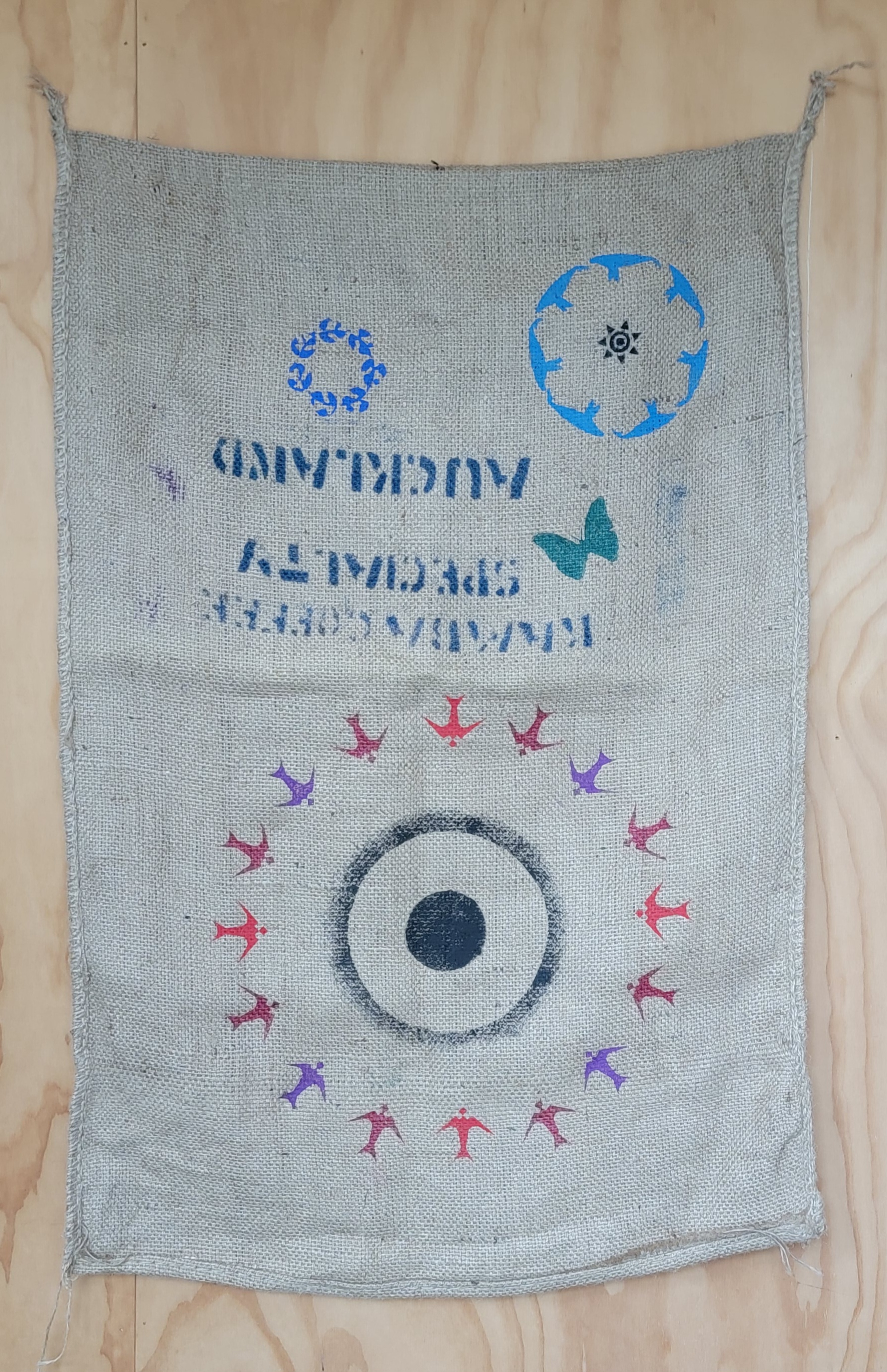
This is a recent work, where I have eliminated a strong focus on electronics, in favour a more balanced approach. I design forms on the computer and use them to create stencils. Then I make plant based paints, and create images such as the one above, on recycled coffee sacks.
It turns out it is very hard to rule out any one media as a no-no given the Anthropocene. For example, it is pointless to exclude computers from creativity and then write about it on the internet. I once heard a keynote where the speaker gave 2008 as the year the combined footprint of all servers for the internet and social media exceeded that of all the international airlines combined.
Avoiding the ‘chain of production’ in order to counter the Anthropocene is not really feasible. For example if an electric vehicle is made in a coal powered fctory, it’s carbon footprint is greater than a petrol car made where the plant uses electricity. It’s not straightforward.
It is upon all artists to consider all of their practice – from gathering resources, to creating works, to presenting them, in light of the Anthropocene and way find their way through to a position based on their reflection. The simplest thing to do if you want to counter the Anthropocene is to start by eating less red meat, driving your car less and only flying when it is important to do so.
Bird Song Light Walk
This is a short movie of one of six units from Bird Song Light Walk. Commissioned by the Festival of Lights, it is a collaboration with John Christini. Six units were hanging in the trees on a path beside the lake in Pukekura Park in Ngāmotu New Plymouth. Each one was assigned a native bird – Kokako, Tui, Whero Blue Duck, Piwakawaka Fantail, Ruru Owl, and Riroriro Grey Warbler. The units were motion activated (saves power). When someone walks underneath the unit is activated, the birdcall heard and visualised in LEDs.
The River Speaks
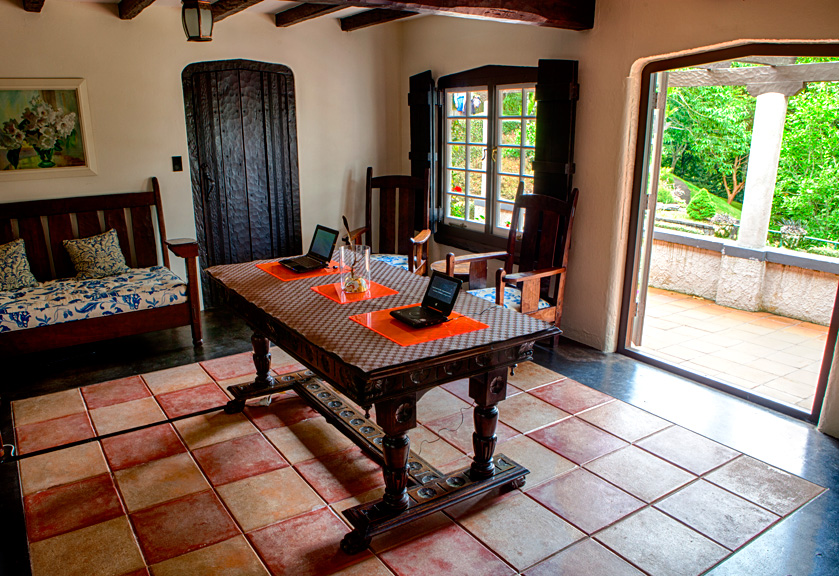
The River Speaks at Tupare House as part of the Massey University and Taranaki Regional Council project Sharing the Waiwhakaiho. This work interconnected live river data from the Waiwhakaiho Awa River which determined the audio that was heard in the installation. Indigenous sound by Darren Robert Terama Ward, Dineh/Navajo Andrew Thomas, words by Te Huirangi Eruera Waikerepuru, throat singing by Nanavut Stacey Aglok Macdonald and audio by Kura Puke were curated in a collaboration with Nina Czegledy.
Wai
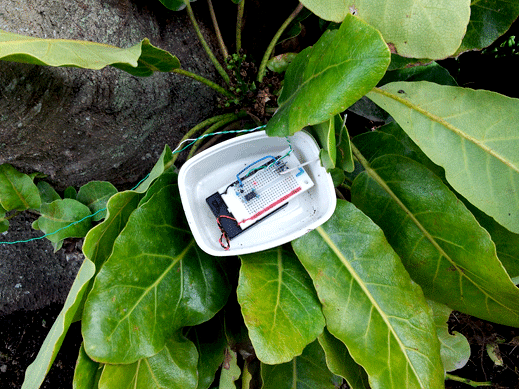
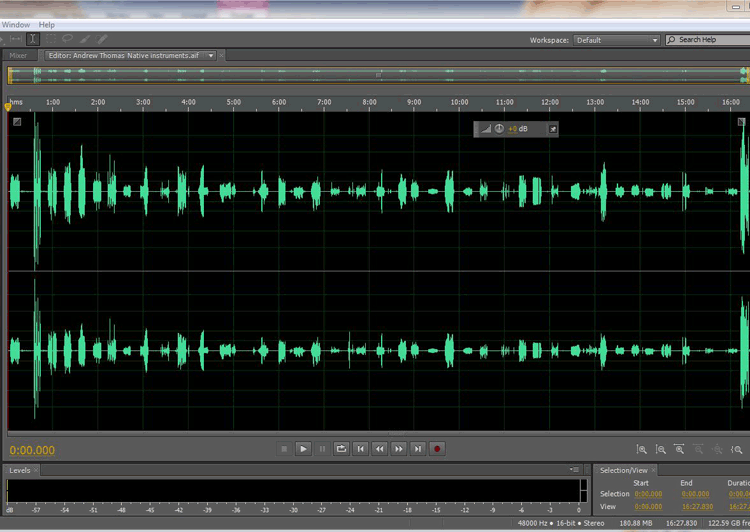
Wai was presented at ISEA in Albuquerque. At the prompting of Te Huirangi, we endeavoured to contact some of the local Indigenous peope and through Harete Tito, were able to. The two images above come from the Wai project. At top is the kind of electronics Andrew Hornblow likes to make – using a recycled margarine container to waterproof the electronics, and making circuits with reusable circuit boards. Andrew had also invented a tree voltage measurer, so we used this as live environmental data input to the project (along with temperature and light).
These data inputs went to the project website (functionality by Julian Priest and Adrian Soundy), where the data stream controlled which of eighty audio files were heard in the gallery installation. Forty of those files are shown in the second image above. There were made by Andrew Thomas, a Dineh/Navajo musician from Albuquerque. The other forty were made by Darren Robert Terama Ward, based in Whanganui a Tara Wellington, who makes and plays his own traditional instruments.
 The website of Mahutoa 'Pasha' Clothier